
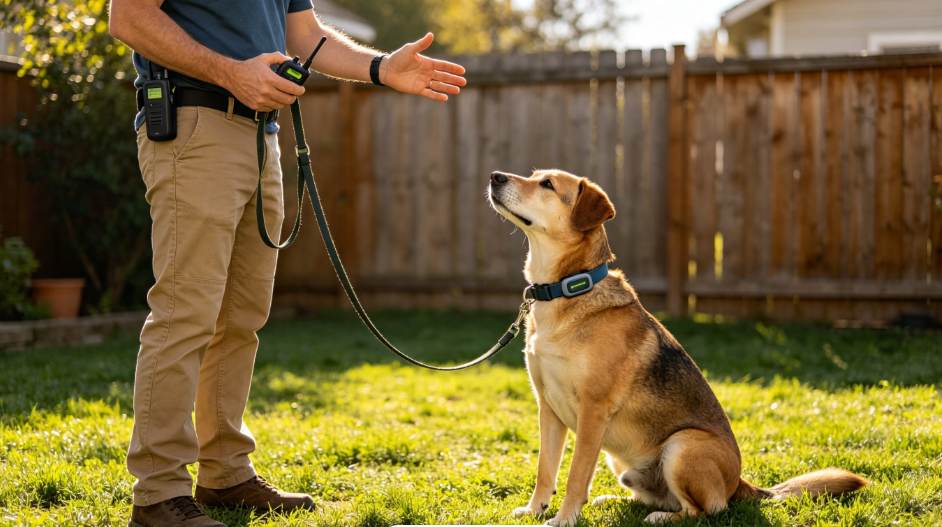
If you live along the Emerald Coast and you are thinking about using a remote collar with your dog, you are not alone. Many dog owners in Santa Rosa Beach, FL, are looking for a more reliable way to communicate with their dogs outdoors, whether that means better recall in approved areas, calmer leash manners near busy public spaces, or stronger focus around the distractions that come with coastal living.
E-collar training for beginners can feel overwhelming at first. There are a lot of opinions online, and not all of them agree. This guide cuts through the noise and gives you a clear, practical picture of what remote collar training actually involves, how to start safely, and what to expect along the way.
Key Takeaways
- An e-collar is a communication tool, not a punishment device
- Foundation obedience must come before remote collar training
- Collar fit and placement directly affect safety and effectiveness
- Finding your dog’s working level is the first step in collar conditioning
- Begin with commands your dog already knows before adding the collar
- Introduce distractions slowly and build confidence over time
- A professional dog trainer can help you avoid common beginner mistakes
What Beginners Should Know About E-Collar Training
Before you purchase a remote collar or put one on your dog, it helps to understand what this tool actually is and what it is not.
A remote training collar is a communication device. It allows you to send a signal to your dog from a distance using a handheld transmitter. The receiver, worn on the dog’s neck, delivers a low-level stimulation that gets your dog’s attention and helps reinforce commands they already understand.
That last part is important. The e-collar should not be used by beginners to force a dog through behaviors they do not understand. It works best as part of a structured training plan where the dog is learning clear commands, leash guidance, timing, and follow-through. Think of it as an extension of communication that helps reinforce obedience when your dog is farther away, distracted, or working in a more challenging environment.
For dog owners in Santa Rosa Beach, this kind of reliability matters. The Florida Gulf Coast environment is full of distractions: shorebirds, other dogs, beach traffic, and open water. A dog with strong foundational obedience and proper remote collar conditioning is better prepared to handle that environment with more focus, structure, and reliability.
The e-collar works best when it is introduced calmly, at the right time, and by a handler who understands how to use it. That is exactly what this guide covers.
Safe E-Collar Setup for Dogs
Getting the setup right from the start is one of the most important parts of beginner e-collar training. Poor fit is one of the most common reasons remote collars fail to work properly, or worse, cause unnecessary discomfort.
Proper placement on the neck
Position the receiver high on the neck, just below the jaw, and slightly to the side of the windpipe. The contact points need to sit against the muscle, not on the throat. This placement ensures consistent contact and keeps pressure away from sensitive structures.
Getting the fit right
The collar should be snug but not tight. A good rule of thumb is that you should be able to slide two fingers between the strap and your dog’s neck. If the collar slides around freely, the contact points will lose consistent skin contact. If it is too tight, it can cause irritation over time.
Check for coat thickness
Dogs with thicker or longer coats may need longer contact points so the stimulation reaches the skin. If the receiver is sitting on top of a thick coat rather than against the skin, your dog will not feel a consistent signal, which defeats the purpose of the tool.
Limit daily wear time
Even when training is going well, avoid leaving the collar on for more than six to eight hours at a time. Check the skin under the contact points daily for any redness or irritation. Rotating the collar’s position slightly throughout the day helps prevent pressure marks.
Let your dog wear it before using it
Before activating the collar for training, let your dog wear it during positive activities like walks, meals, and playtime. This helps your dog associate the physical feel of the collar with good things, which makes the first active training session go more smoothly.
Understanding Working Level and Collar Conditioning
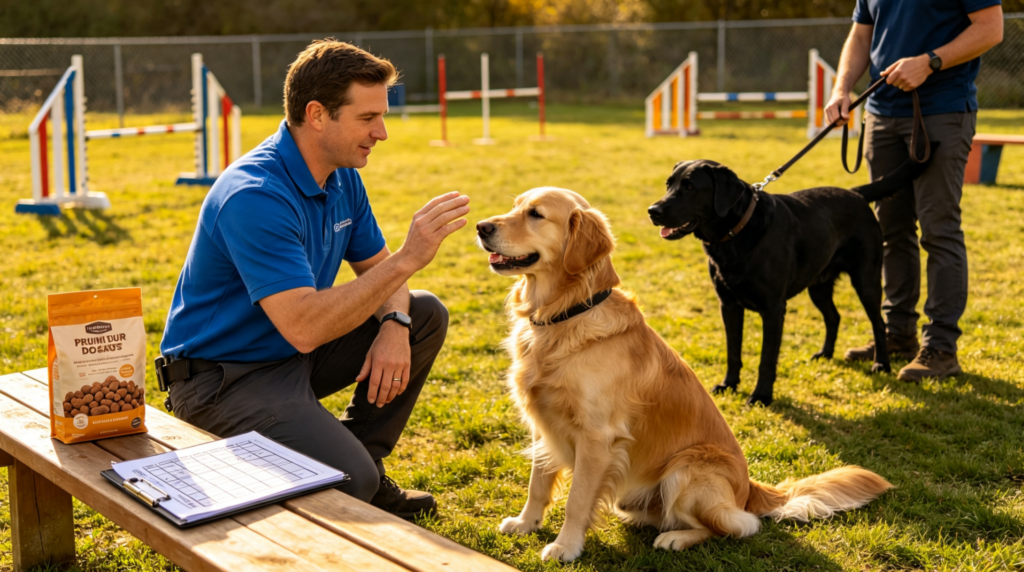
Two concepts that often confuse beginners are working level and collar conditioning. Both are essential, and skipping either one can lead to problems down the road.
What is a working level?
Every dog has a different sensitivity to remote collar stimulation. The working level is the lowest stimulation setting at which your dog notices the signal. It is not the level that causes a reaction. You are not looking for a yelp, a flinch, or a startled response. You are looking for the smallest sign of awareness, such as an ear flick, a slight head turn, or a subtle shift in posture.
To find this level, place the collar correctly and start at the lowest setting in a calm, distraction-free environment. Slowly increase one level at a time while watching your dog closely. The moment you see a subtle acknowledgment, stop. That is your baseline.
Why collar conditioning matters
Collar conditioning is the process of teaching your dog what the stimulation means before you start using it during obedience work. Done correctly, it builds a positive association with the signal. Your dog learns that the sensation is a cue, not something to fear.
Rushing this step is one of the most common mistakes in beginner e-collar training. If a dog experiences stimulation before they understand what it means, confusion or anxiety can follow. Conditioning takes patience, but it protects your dog’s confidence throughout the entire training process.
During conditioning, you pair the stimulation with something your dog already understands, like gentle leash pressure or a verbal cue they know well. Over repeated sessions, the dog learns that the signal means something is being asked of them, and that responding correctly makes the sensation stop. This is clear, fair communication.
Basic Commands to Start With
Once your dog understands the collar signal and you have established their working level, you can begin layering the remote collar onto commands they already know. This is not the time to introduce new behaviors. Start with the fundamentals.
Recall
Recall is arguably the most important command to reinforce with remote collar training. Begin with your dog on a long line in a low-distraction area. Give the recall command, apply gentle stimulation at the working level, and release the button the moment your dog begins moving toward you. Reward immediately and enthusiastically when they arrive. The dog learns that responding to the command ends the signal and earns a reward.
Place command
The place command teaches your dog to go to a specific object and remain there until released. It builds impulse control and confidence. Begin by reinforcing the behavior your dog already knows using the collar paired with verbal cues and leash guidance. Once the dog is consistent on leash, you can gradually extend distance and duration.
Heel and leash manners
For dogs that pull or drift during walks, the remote collar can help reinforce position without constant leash corrections. Your dog should already understand heel from leash work before you pair it with the collar. Use low-level stimulation to communicate when your dog drifts out of position, and reward when they return.
Sit
Sit is a clean, simple behavior to pair with the collar during early training. It gives you a familiar starting point to practice timing, which is one of the most critical skills for any handler using remote collar tools.
A note on timing
Timing is everything. The stimulation must happen exactly when the command is given, and it must stop the moment your dog begins to comply. Late timing or holding the button too long sends mixed signals and slows learning significantly. Calm, consistent handling is more effective than frequent corrections.
How to Add Distractions Safely
One of the main reasons dog owners pursue remote collar training is to get reliable obedience in the real world. But the real world is full of distractions, and adding them too quickly is a common beginner mistake.
Start in low-distraction environments where your dog is already succeeding. Once your dog is responding consistently in the backyard or a quiet park, you can introduce mild distractions like a ball on the ground nearby, another person walking at a distance, or light foot traffic.
Gradually increase the level of distraction as your dog earns it. Each successful session should end before your dog becomes frustrated or starts making repeated mistakes. Short, focused training sessions build faster progress than long ones, where attention breaks down.
In a beach community like Santa Rosa Beach, distractions may eventually include birds, sand, waves, foot traffic, and other dogs. Work up to those environments only after your dog is solid in quieter settings, and always follow local leash rules, permit requirements, and posted access guidelines. The goal is always to set your dog up to succeed, not to test them in situations they are not ready for.
Common Beginner Mistakes to Avoid
Knowing what not to do is just as important as knowing what to do. These are the mistakes that trainers see most often from owners starting remote collar training on their own.
Skipping foundation obedience. For beginners, the collar works best when your dog already has a basic understanding of the commands you want to reinforce. If your dog does not have a clear sit, recall, or heel on leash, remote collar training may create confusion instead of better communication. Build the obedience first.
Starting at too high a level. Many beginners assume the collar needs to be noticeable to work. In reality, the working level is almost always much lower than owners expect. Starting too high causes stress and can make your dog reluctant to train.
Inconsistent timing. Pressing the button after your dog has already ignored the command, or holding it too long, creates confusion. Practice pressing and releasing the button cleanly before you ever put the collar on your dog.
Using the collar as punishment. The remote collar is a communication tool, not a consequence for misbehavior. Applying high stimulation when you are frustrated or angry damages trust and can create lasting anxiety around training.
Skipping collar conditioning. Putting the collar on and immediately asking your dog to perform under stimulation, without any conditioning phase, overwhelms the dog and skips the most important step in the whole process.
Moving too fast. Progress should follow your dog’s readiness, not your schedule. If your dog is struggling with a step, back up and simplify before moving forward.
When to Get Professional Help
Remote collar training is a powerful tool when used correctly. It is also a tool that is easy to misuse without proper guidance, especially for beginners who are learning on their own.
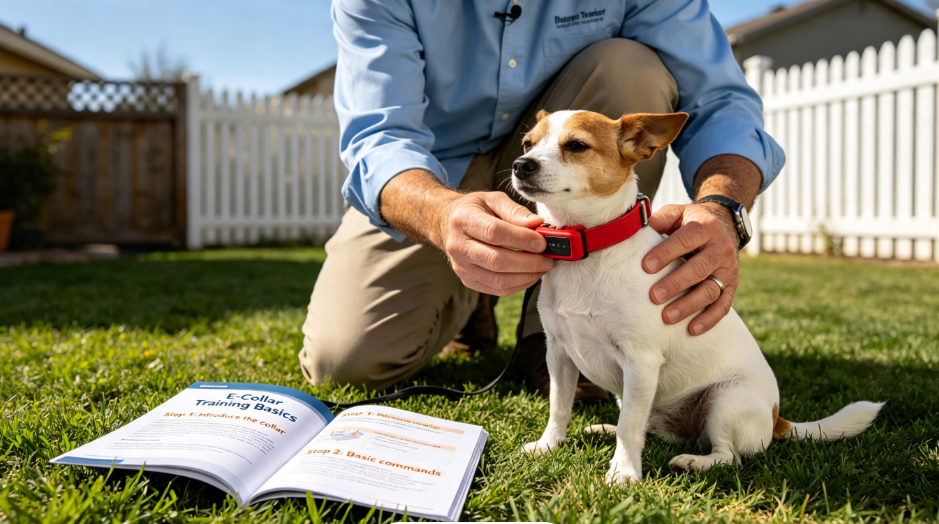
Working with a qualified professional dog trainer before or during your introduction to the remote collar can help you avoid common mistakes and build better habits from the start. A professional can help you find your dog’s working level, teach timing and mechanics in real time, identify whether your dog is ready for the tool, and build a training plan that fits your specific goals and lifestyle.
If you are in the Santa Rosa Beach area and want to start e-collar training for beginners on solid footing, professional guidance can help you avoid common mistakes and build a clearer plan. Whether your goal is better recall in approved areas, calm leash manners on vacation, or a more attentive dog in everyday life, working with someone who understands remote collar training can make the process clearer, more structured, and easier to maintain.
Final Thoughts
E-collar training for beginners is not complicated when you approach it with the right mindset and the right foundation. The remote collar is a tool that helps you communicate with your dog more clearly, extend your reach beyond the leash, and build the kind of reliability that holds up in real-world environments.
The most important things to remember are these: build your dog’s obedience before picking up the remote, take the time to find your dog’s working level carefully, condition the collar before you use it in training, and stay consistent. Timing, patience, and calm handling will take you further than any setting on the remote.
If you are ready to start or you want to make sure you are doing it right, reach out to a professional dog trainer in the Santa Rosa Beach area. Starting with proper guidance is the best investment you can make for your dog’s long-term success.
Frequently Asked Questions
What age does a dog need to be before starting e-collar training?
Most professional trainers do not start e-collar training until a dog is old enough to handle the structure and communication involved. For this location, e-collar training generally starts when a dog is at least 5 months old. Puppies younger than that can still begin training with foundation work, clicker training, treats, house training, and basic obedience skills so they are better prepared for future training.
Does my dog need to know basic commands before using an e-collar?
Yes. For beginners, the e-collar should be introduced after your dog has a basic understanding of the commands you want to reinforce. Your dog should respond to sit, recall, and heel on a long line in a calm environment before the remote collar is added. If those behaviors are not clear first, the collar can create confusion instead of better communication.
Will my dog feel pain from the e-collar stimulation?
When used correctly at the working level, the stimulation from a quality remote collar is designed to be noticeable but not painful. Most owners who try the collar on themselves are surprised by how subtle the lowest levels feel. The goal is clear communication, not discomfort. Using too high a level, however, is uncomfortable and counterproductive, which is why finding the correct working level is such a critical step.
How long does it take to see results with remote collar training?
Some dogs begin responding more clearly once the collar is properly introduced, conditioned, and paired with commands they understand. However, the timeline for reliable obedience depends on the dog’s age, temperament, prior training history, distractions, and owner consistency. A professional trainer can give you a more realistic expectation after evaluating your dog and your goals.
Do I need a professional trainer to use an e-collar?
Technically, no, but working with a professional dog trainer is strongly recommended, especially for beginners. Proper timing, level finding, and conditioning are skills that are easy to get wrong without someone experienced to guide you. A qualified trainer can help you move through the foundation stages safely, correct mistakes early, and build a training plan that leads to lasting results.
