
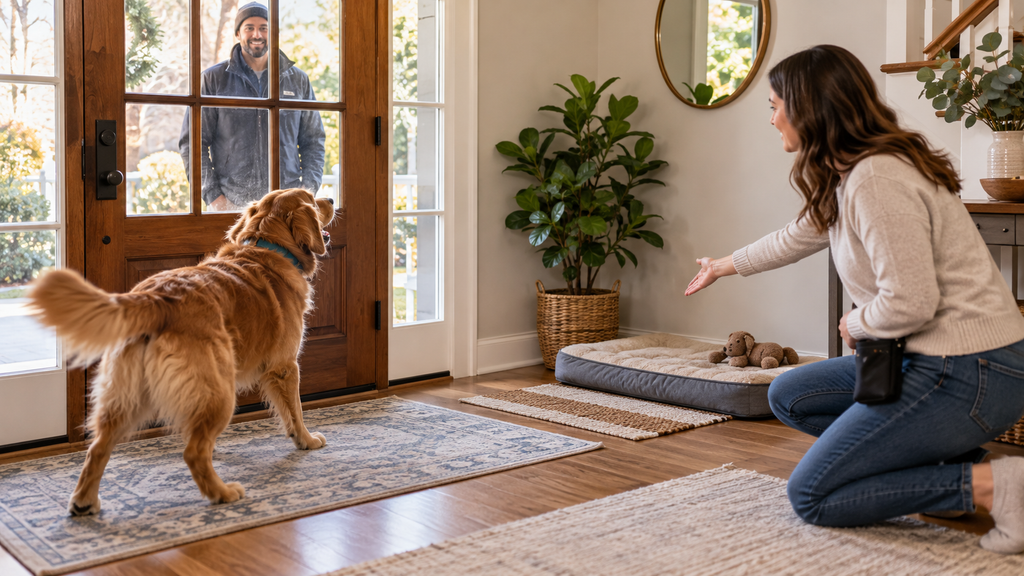
The doorbell rings, and your dog launches into a frenzy of barking, spinning, and rushing the door. If your dog barks at the doorbell every time, you’re not alone. It’s one of the most common household behavior concerns, and it can make deliveries and visits stressful.
The good news is that doorbell barking is a learned response, which means it can be reshaped with structure, practice, and patience.
Why a Dog Barks at the Doorbell
Different dogs bark for different reasons. Often more than one applies.
Alert Behavior
Dogs notice sounds and movement around the home. A doorbell signals that someone is nearby, so barking becomes a way to sound the alarm.
Excitement
Many dogs love visitors. The doorbell predicts guests, so the barking and jumping come from anticipation.
Fear or Uncertainty
A loud, sudden sound can unsettle some dogs. Barking may be their way of creating distance or coping with stress.
Habit and Learned Responses
If barking has been going on for a while, it may now be automatic. Dogs repeat what has worked, and the door opening after barking can feel like a reward.
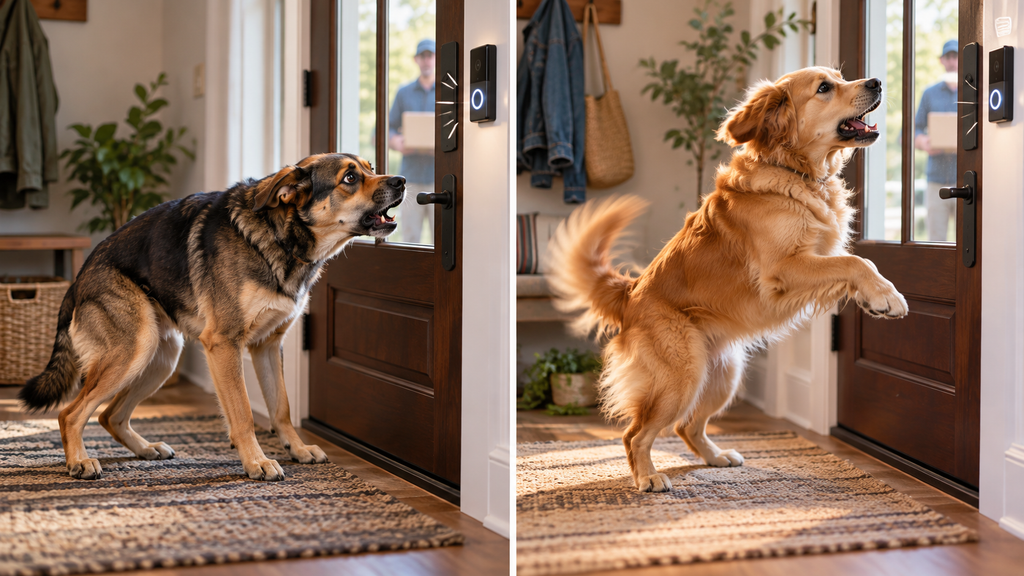
Signs Your Dog Barks at the Doorbell From Stress vs. Excitement
- Excited: Wiggly body, jumping, tail wagging, rushing to the door
- Alert: Stiff posture, focused stare, barking toward the door or window
- Nervous: Pacing, backing away, panting, tucked tail
Knowing what you’re seeing helps you choose a calmer approach.
Start With Structure and Management
While you’re training, make it easier for your dog to succeed.
- Put a note on the door asking visitors to knock softly or text
- Keep your dog away from the front door when guests arrive
- Use a baby gate or leash to prevent rushing the door
- Block window views if barking at passersby fuels the behavior
Management doesn’t replace training, but it stops your dog from practicing the barking while he learns something better.
Build a Calmer Response Step by Step
1. Teach Place First
Place gives your dog a clear job. Practice sending your dog to a mat or bed and rewarding him for staying. Make sure he’s solid on Place in a quiet setting before adding the doorbell.
2. Use a Consistent Cue
Pick one cue, like “Place,” and use it the same way every time. Say it once, then help your dog succeed rather than repeating it.
3. Desensitize the Sound
Record your doorbell or use a recording, and play it at a low volume while your dog is relaxed. Reward calm behavior, then slowly increase the challenge. You can also practice with knocking on a table or wall.
4. Pair the Doorbell With Something Good
When the sound predicts a calm, rewarding routine, your dog starts to look forward to it. Play the sound, cue Place, and reward your dog for settling.
5. Add Realistic Steps
Gradually build toward real life:
- Have a helper ring the bell from outside
- Add door opening
- Add a visitor stepping inside
- Practice with different people and times of day
Go at your dog’s pace. If he gets too excited, return to an easier step.
Reward Calm Behavior
Catch the behavior you want, not just the barking you don’t.
- Reward quiet moments before the bell rings
- Give treats at the mat while the door opens
- Release your dog to greet only when he’s calm
This helps your dog stay calm around guests, not just quiet for a moment.
Common Mistakes to Avoid
- Yelling over the barking: Dogs may think you’re joining in.
- Punishing the dog: This can raise stress and make the doorbell feel worse.
- Practicing only when guests arrive: Real visits are too hard for early training.
- Rushing the steps: Too much too fast can set progress back.
- Inconsistency: Different cues or rules from different people slow learning.
When to Get Professional Support
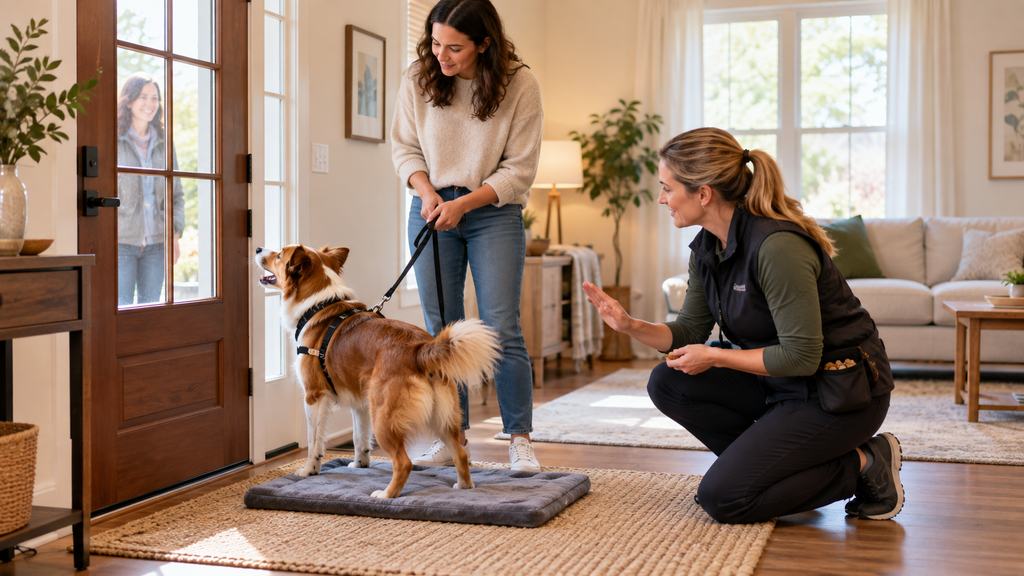
If your dog barks at every sound, struggles to calm down after guests arrive, or shows fear or intense reactivity, a professional can help. A trainer can read your dog’s body language, tailor a plan to your home, and coach you through timing and handling. Obedience training can also strengthen the foundation for calm behavior at the door.
Frequently Asked Questions
Why does my dog bark at the doorbell but not at knocking?
Dogs often associate specific sounds with visitors. The doorbell may be louder or more startling, or it may predict guests more reliably. Training can help your dog respond calmly to both.
Should I ignore my dog when he barks at the doorbell?
Ignoring alone may not be enough, especially if barking is self-rewarding. Redirect your dog to Place and reward calm behavior. This gives your dog something clear to do instead.
Can I stop my dog barking at the doorbell by removing the bell?
Removing the doorbell can reduce a trigger while you train. Dogs may still bark at knocking, voices, or footsteps, so training the calm response matters.
How long will doorbell training take?
Every dog is different. Progress depends on your dog’s history, consistency, and how often you practice. Short, regular sessions tend to work better than occasional long ones.
Final Thoughts
When your dog barks at the doorbell, he’s responding to what the sound means to him. With structure, a consistent cue, place training, and rewarded calm behavior, you can help him build a more relaxed response. If the barking persists or is hard to manage, consider working with a professional trainer who can guide you through practical, real-life steps.
