
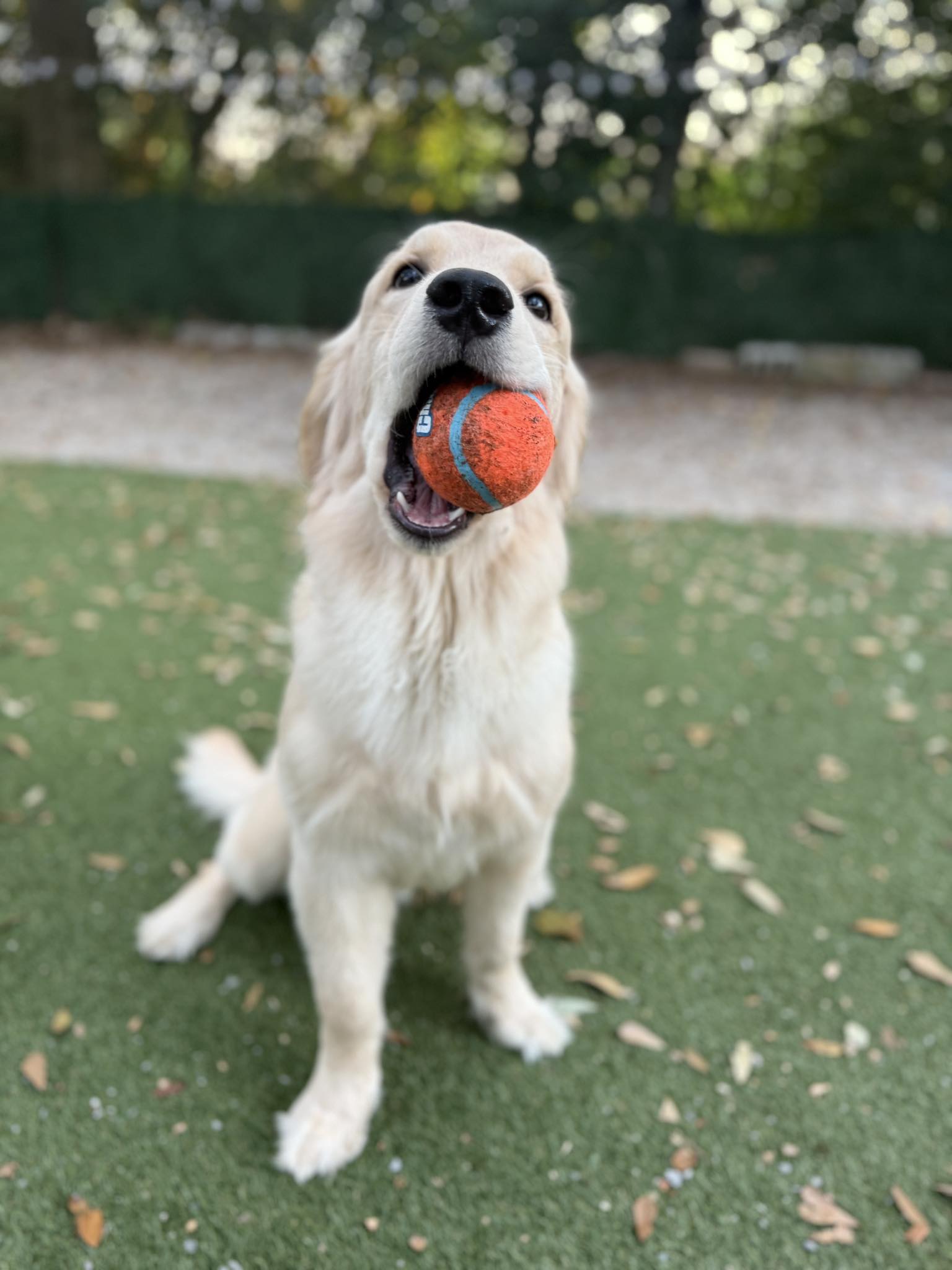
If you are wondering how to train a puppy not to bite, start by redirecting those sharp teeth to appropriate chew toys, rewarding gentle behavior, and calmly pausing play when teeth touch skin. Much of the mouthing and nipping seen in young puppies is related to exploration, teething, and play rather than aggression. With consistent practice and appropriate rest, many puppies gradually develop gentler play habits.
Still, those needle-sharp teeth hurt, and nipping at hands, ankles, and clothes can wear down any household. This guide explains why puppies bite, how bite inhibition works, what to do in the moment, and how to keep young children safe, with practical tips for puppy owners in Santa Rosa Beach.
Key Takeaways
- Mouthing, teething, and play biting are normal parts of puppy development.
- Bite inhibition, or a soft mouth, is one of the most important lessons a puppy can learn.
- Redirect to chew toys, reward calm behavior, and pause play when teeth touch skin.
- Some puppies become more mouthy when they are overstimulated or tired, so regular opportunities for quiet rest can help.
- Always supervise puppies with young children, and never use physical punishment.
Why Puppies Bite: Mouthing, Teething and Play
Puppies commonly use their mouths while exploring, teething, and playing. Some also become more mouthy when they are highly excited, overstimulated, or tired. In many young puppies, this type of mouthing is part of normal development, but body language and context still matter when deciding whether behavior is playful or concerning.
Normal Mouthing and Exploring
Puppies use their mouths the way toddlers use their hands. Picking things up, chewing, and tasting is how they learn about the world. The AKC’s guide to puppy mouthing notes that mouthing hands, feet, and objects is completely normal, even though it should not be encouraged on people.
Teething
Puppies lose their baby teeth and grow adult teeth over several months, and sore gums make chewing feel good. According to the AKC’s teething and nipping guide, most puppies finish teething by about 6 months of age, which is why some seem extra mouthy before then. Safe chew toys give that discomfort somewhere to go.
Play Biting
In a litter, puppies chase, pounce, and bite each other constantly. When they play with people, they often try the same game on hands, sleeves, and pant legs. Your job is to show them that people play differently.
Overstimulation and Overtiredness
Some puppies become more excitable and mouthy later in the day or after a lot of activity. If biting increases when your puppy appears overstimulated or tired, a potty break followed by quiet rest may be more helpful than adding another intense play session.
What Bite Inhibition Is and Why It Matters
Bite inhibition is a dog’s ability to control the force of their mouth. Puppies start learning it from littermates, who yelp and stop playing when a bite is too hard. Teaching your puppy that human skin is sensitive helps them grow into an adult dog with a gentle, controlled mouth.
The ASPCA explains that a puppy who has not learned bite inhibition with people does not realize how sensitive human skin is, so they bite too hard even in play. The core lesson is simple: gentle play keeps going, and painful play stops.
Bite inhibition remains a useful skill beyond puppyhood because it teaches a dog to control the force of their mouth during normal interactions and play. However, puppy bite-inhibition training should not be treated as a guarantee that an adult dog will never bite or cause injury when frightened, painful, or highly stressed. Safe play with healthy, vaccinated puppies and calm adult dogs also helps, as this guide to puppy socialization explains.
How to Stop a Puppy From Biting, Step by Step
To stop a puppy from biting, keep chew toys within reach, redirect your puppy before and during biting, reward calm and gentle behavior, and pause play the moment teeth touch skin. Add short, calm breaks when your puppy is too wound up, and make sure they get plenty of rest.
Keep the Right Chew Toys Within Reach
Have several safe chews in every room where your puppy spends time, such as rubber toys, tug toys, and teething toys sized for your puppy. Rotate them so they stay interesting. Ask your veterinarian which chews are safe for your puppy’s age and size.
Redirect Before and During Biting
Offer a toy before your puppy grabs your hand, such as when you reach to pet them or when play starts. If teeth land on you, stop moving and swap your hand for the toy. Praise and keep playing when your puppy chooses the toy.
Reward Gentle Behavior
Notice and reward the moments you want to see more often: licking instead of biting, a soft mouth, settling on a mat or chewing a toy. Small treats and calm praise teach your puppy that gentle choices pay off.
Pause Play When Teeth Touch Skin
If your puppy bites during play, calmly stop the interaction for a few moments. You can use a neutral word such as “oops,” then resume only when your puppy is calmer. If vocalizing makes your puppy more excited, skip the sound and simply pause the interaction. If biting resumes immediately, end the play session and give your puppy a chance to settle.
Use Calm Breaks, Not Punishment
If your puppy is too wound up to continue playing, calmly end the interaction and give them a quiet break in an appropriate puppy-safe area, such as a pen or another calm space. If you use the crate, keep the transition neutral and consistent with your normal crate routine so the puppy does not begin associating the crate with punishment.
Manage Excitement and Protect Naps
Keep play sessions short, mix in easy training like “sit,” and avoid games that encourage your puppy to lunge at hands. Young puppies need a lot of sleep, so build regular naps into the day. After a busy outing, giving your puppy an opportunity to potty and settle in a quiet environment may help if overstimulation or tiredness is contributing to increased mouthing.
What to Do When Your Puppy Bites Hands, Feet or Clothing
Different targets call for slightly different responses, but the theme is the same: stop the game, then offer something better to bite.
Hands
Hands are the most common target because they move and are always near your puppy’s face. Keep a toy in your hand when you play or pet, avoid wiggling your fingers in front of your puppy, and skip games that use your hands as toys. If your puppy mouths while you pet them, offer a chew and pet with your other hand.
Feet and Ankles
Moving feet can be especially tempting for a playful puppy to chase and grab. When your puppy grabs your ankles, stop walking and stand still, since movement makes the game more exciting. When they let go, praise them and toss a toy away from your feet so they have something better to chase.
Clothing and Leashes
Tugging on a sleeve or pant leg turns into tug-of-war if you pull back. Freeze, wait for your puppy to let go, then redirect to a real tug toy. Puppies who grab the leash on walks often need a similar approach, and this guide explains why dogs bite the leash and how to handle it.
Puppies and Young Children: Supervision Comes First
Children move fast, squeal, and wave their hands, which can turn a puppy’s play into a nipping frenzy. The ASPCA’s dog bite prevention guidance is clear: always supervise children and dogs, and never leave a baby or young child alone with a dog.
Supervision means actively watching, not just being in the same house. When you cannot watch closely, use a gate, pen, or crate so your puppy and child are in separate spaces.
A few habits help families with young children:
- Plan play during your puppy’s calmer times of day, not when they are overtired.
- The Wisconsin Humane Society suggests teaching children to keep a toy in each hand during play, so the puppy has something appropriate to grab.
- Teach children to stand still, fold their arms, and look away if the puppy nips, rather than running or screaming.
- Do not let children chase the puppy, pick it up without an adult, or bother it while it eats or sleeps.
For more family tips, see this guide to keeping children safe around dogs.
What Not to Do
Physical punishment and intimidating handling are not recommended for puppy biting and may increase fear, conflict, or sensitivity to handling. Avoid these common mistakes:
- Hitting, swatting, or tapping your puppy’s nose.
- Grabbing or holding your puppy’s mouth shut.
- Alpha rolls, or pinning your puppy on their back.
- Yelling, looming over your puppy, or other forms of intimidation.
- Rough play or wrestling that encourages your puppy to use their mouth on you.
The Wisconsin Humane Society specifically warns against holding a puppy’s mouth closed or rolling them onto their back. The AKC also notes that physical responses to biting can make puppies fearful of being handled, which is the opposite of what you want.
When to Get Help From a Veterinarian or Qualified Professional
Puppy mouthing often changes as puppies mature and learn appropriate play, but some biting deserves a closer look. Talk to your veterinarian or a qualified behavior professional if biting is accompanied by stiff or frozen body language, guarding, repeated bites during handling, injuries, or a sudden change from your puppy’s usual behavior. Sudden behavioral changes can sometimes be associated with pain or another medical problem.
Your veterinarian is the first stop when biting appears suddenly, gets worse, or comes with signs of discomfort, such as a sore mouth or sensitivity to touch. For behavior concerns, PetMD notes that certified behavior consultants (CDBC), certified applied animal behaviorists (CAAB), and veterinary behaviorists (DACVB) are all qualified to help. A trainer experienced with young puppies can also help you build calm daily routines, and you can learn more about puppy training in Santa Rosa Beach.
Final Thoughts
Learning how to train a puppy not to bite takes patience, but the formula is straightforward: give those teeth better outlets, reward the gentle mouth you want, pause play when teeth hit skin, and make sure your puppy gets enough rest. Keep children and puppies supervised, and skip harsh corrections that can backfire. Training progress varies, but consistent practice helps many puppies learn a softer, calmer way to play.
Contact Us
If your puppy’s biting or other early behavior concerns are difficult to manage, professional guidance can help you decide what training support may be appropriate. Off Leash K9 Training 30A’s Puppy Training Consultation is designed for puppies under five months and focuses on foundations such as socialization, crate training, housebreaking, and home manners.
Call (850) 616-2800 or schedule a free phone consultation to discuss your puppy’s age, behavior, and training goals. You can also review current programs on the Plans & Pricing page.
Frequently Asked Questions
When do puppies stop biting?
It varies from puppy to puppy. The AKC notes that most puppies become much less mouthy as they finish teething and mature, often between 4 and 6 months of age. Consistent training helps, and biting that stays hard or frequent beyond that stage is worth discussing with a professional.
Is my puppy playing or being aggressive?
Play biting usually comes with a loose, wiggly body, play bows, and frequent breaks in the action. Warning signs include a stiff or frozen body, hard staring, lifted lips, growling while guarding something, or biting when handled. The AKC recommends professional help for true aggressive biting, so ask your veterinarian or a qualified behavior professional if you are unsure.
Why does my puppy bite more in the evening?
Many puppies get nippier when they are overtired or overstimulated, and evenings often follow a busy day. Instead of more play, try a short potty break, a chew toy, and a quiet nap in a crate or pen. A predictable daily routine with regular naps often reduces evening biting.
How do I stop my puppy from biting my kids?
Start with active supervision, and keep your puppy and children in separate spaces when no adult can watch closely. Have children play during the puppy’s calmer times, keep a toy in each hand, and stand still if the puppy nips. The ASPCA advises never leaving a baby or young child alone with a dog.
Should I yelp, say “ouch,” or tap my puppy’s nose?
A calm “ouch” or “oops” followed by a short pause in play can help some puppies learn bite inhibition. If yelping makes your puppy more excited, switch to a calm word and simply stop playing. Never tap, flick, or hit your puppy’s nose, since the AKC notes that physical responses can make puppies fearful of being handled.
