

Introduction
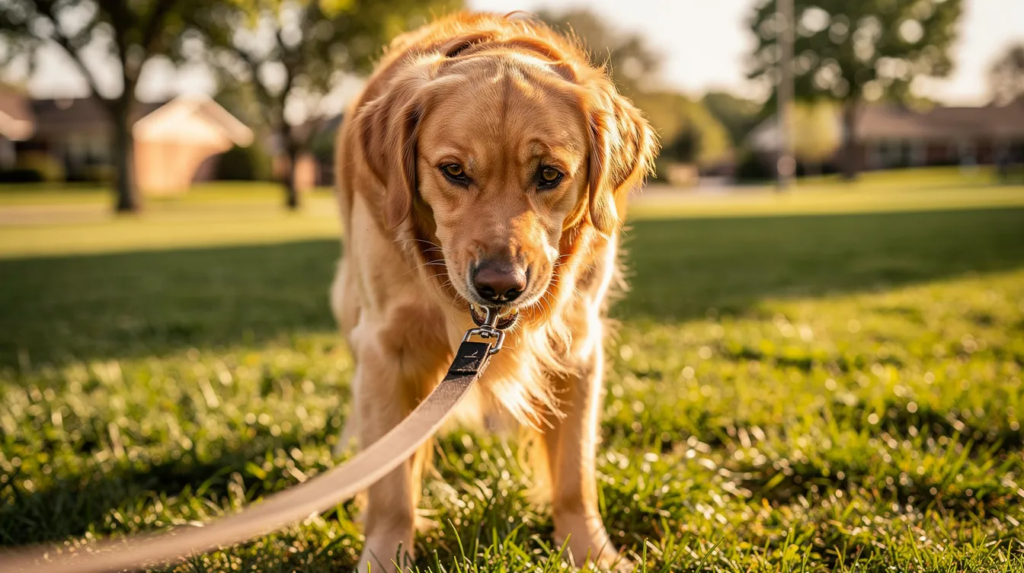
Dogs bite their leashes due to overexcitement and frustration from restraint-and it’s one of the most common complaints among dog owners starting leash training. If your pup grabs, chews, or plays tug with the leash every time you step outside, you’re not alone. Leash biting is a fixable behavior, but understanding why it happens is the first step toward stopping it for good.
This guide covers the root causes behind leash biting, proven training techniques to correct it, equipment modifications that support your efforts, and long-term prevention strategies. It does not cover cases of severe aggression or resource guarding that require immediate intervention from a certified behaviorist-those situations need hands-on professional assessment. The target audience here is dog owners in the training phase, puppy parents navigating the leash biting phase, and anyone whose dog has made biting the leash an annoying daily habit.
The short answer: Most dogs bite their leashes because of excitement, frustration, boredom, or a lack of proper leash education. This behavior responds well to consistent positive reinforcement, redirection, and the right equipment choices. With patience, many dog owners resolve it within a few weeks.
By reading this guide, you will:
- Understand the emotional and environmental causes behind leash biting
- Master three proven training techniques to stop biting during walks
- Know how to select equipment that discourages chewing and supports training
- Learn how to prevent leash biting from returning after initial correction
- Recognize when professional dog training intervention is the best way forward
Understanding Leash Biting Behavior
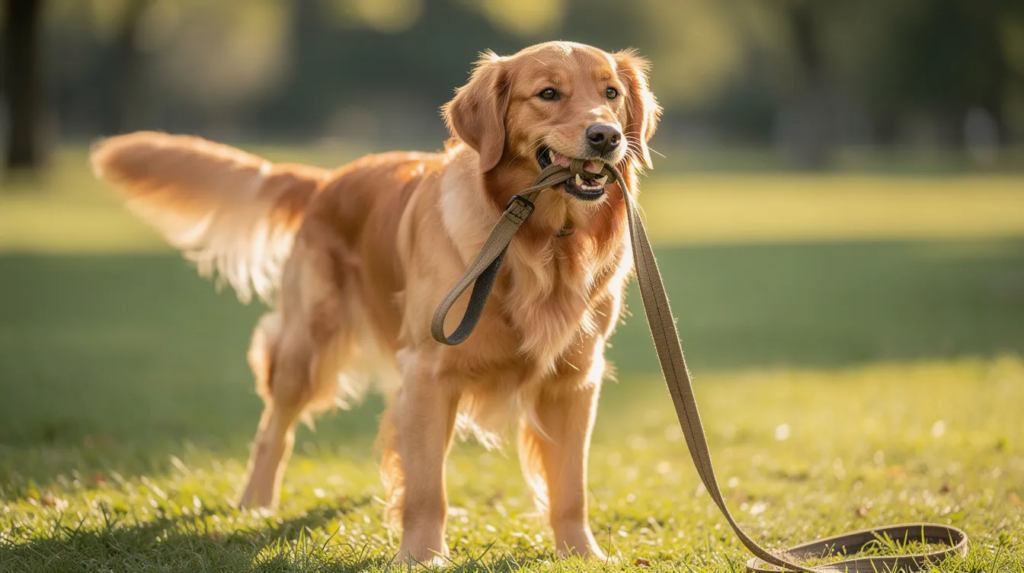
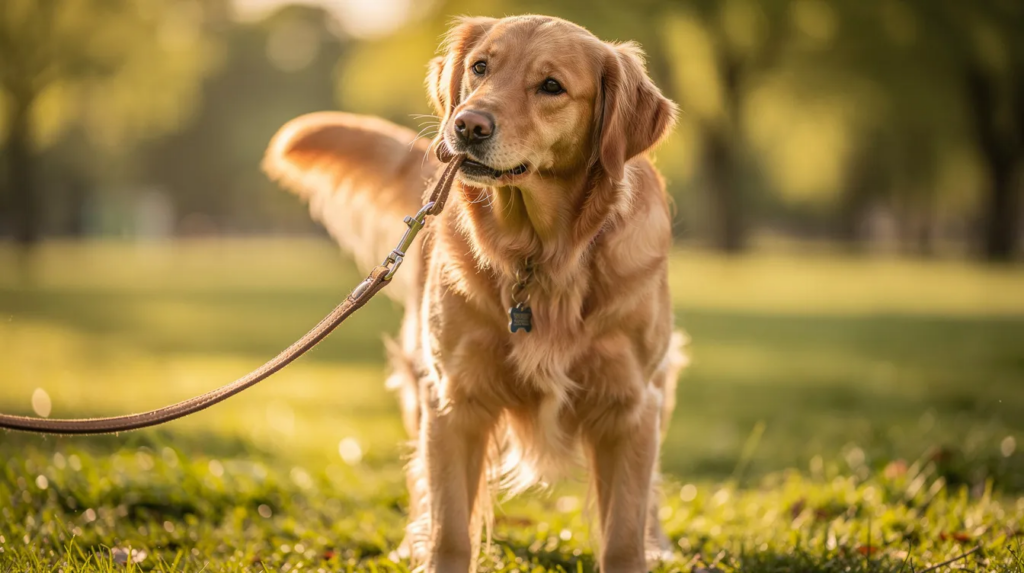
Leash biting is more than a puppy being playful with a dangling strap. While normal mouthing-gentle, exploratory contact with the mouth-is part of how many puppies interact with the world, leash biting involves intentional grabbing, chewing, and tugging at the leash, often with enough force to disrupt a walk entirely. Some dogs view leash biting as a game of tug, turning every outing into a wrestling match with the lead.
This behavior matters because it undermines on leash behavior and training progression. A dog that won’t stop biting the leash can’t learn to walk calmly beside you, pulls you off balance, and damages equipment. Left unchecked, it can also indicate underlying stress or anxiety in dogs, making it a signal worth investigating rather than dismissing.
Primary Causes of Leash Biting
Excitement and overstimulation are the most frequent triggers. The moment you pick up the leash, many puppies become overly excited-their nervous energy needs an outlet, and the leash becomes the nearest chewable object. A 2021 survey study found that mouthing behavior is significantly more common in dogs under one year old, which explains why puppies often bite leashes during initial leash training. That excited puppy energy, without impulse control training, channels directly into the leash.
Frustration from movement restriction is the second major driver. Leash biting can occur from frustration in arousing environments-when a dog spots other dogs, interesting smells, or people and can’t reach them, the leash becomes the target of that frustrated energy. According to the AKC, dogs often redirect frustration onto the leash because it represents the barrier between them and what they want. Pulling back on the leash can encourage a dog to bite harder, escalating the cycle.
These emotional triggers-excitement and frustration-directly lead to leash targeting because the leash is the most accessible physical object connected to the dog’s sense of restriction or arousal.
Behavioral Triggers and Environmental Factors
Boredom plays a larger role than many dog owners realize. Dogs may bite leashes due to boredom, especially during slow-paced walks, long waiting periods, or repetitive routes that offer little mental stimulation. As Dogster notes, without sufficient environmental enrichment, the leash becomes the most interesting thing available to interact with. Leash biting can also be a response to boredom or teething in young puppies, who need to chew as part of their development.
Attention-seeking is another powerful motivator. If you react strongly when your dog grabs the leash-whether you get mad, laugh, or chase the dog to retrieve it-your pup quickly learns that biting the leash is a fun game that gets your full attention. Even negative attention reinforces the behavior. Dogs may also bite leashes to self-soothe when anxious, using the repetitive chewing motion as a naturally calming mechanism in stressful situations.
Environmental factors compound these triggers: putting the leash on near the front door creates high-arousal associations, dangling leash hardware near the dog’s head invites mouthing, and inconsistent walk routines create uncertainty that fuels excitement. Understanding whether your dog’s leash biting stems from emotional overflow or learned attention-seeking is essential because each requires a different training approach.
With these root causes clear, let’s move into the specific training techniques that address each one.
Essential Training Techniques to Stop Leash Biting
Now that you understand why dogs bite their leashes, you can apply targeted techniques that address the underlying motivation. The three methods below work for most dogs and can be combined based on your dog’s specific triggers. Consistency across training sessions is what transforms these techniques from temporary fixes into permanent behavior change.
Redirection and Focus Training
Teaching your dog the “leave it” and “drop” commands is the most direct way to interrupt leash biting. Begin training these cues in a calm, leash-free environment inside your house using high-value treats. Once your dog reliably responds indoors, introduce the leash and practice during low-key backyard sessions.
Use a tug toy to redirect leash biting behavior-carry a toy during walks so your dog has an acceptable alternative when the urge to chew strikes. Before walks, spend a few minutes on focus exercises: ask for a sit, practice “watch me” for eye contact, and deliver a treat reward each time your dog checks in with you instead of grabbing the leash. This primes their attention on you rather than the equipment.
During the walk itself, bring treats to encourage sniffing during walks. Frequent check-ins with cues and rewards keep your dog’s mouth and brain occupied with something other than the leash.
Stopping and Waiting Method
This technique is simple and powerful: the moment your dog begins biting the leash, stop walking immediately. Stand still, stay quiet, and wait. No lecturing, no pulling back, no correction-just a complete freeze.
Stop walking when your dog bites the leash. Only start walking again when the dog voluntarily releases. This removes the primary reward-forward movement and exploration-from the bad behavior. Over time, your dog learns the pattern: biting means everything stops; releasing means the walk continues.
Staying calm during the wait is critical. If you get frustrated or try to wrestle the leash free, you’ve turned it into a tug game, which is exactly what your dog wanted. Most dogs will drop the leash within 30 seconds to a minute once they realize nothing fun is happening. The moment they release, immediately praise and start walking again.
Positive Reinforcement Strategies
Reward loose leash walking with high-value treats-this means catching your dog doing the right thing before the wrong behavior even begins. When your pup walks beside you with a loose leash and no mouthing, mark that moment with praise or a treat. Timing matters: reward your dog for loose leash walking with treats the instant the good behavior occurs, not after the urge to bite has already surfaced.
Build positive associations with the leash itself during calm moments. Practice putting the leash on inside the house, reward with treats, and remove it-no walk attached. This breaks the leash-equals-excitement pattern that makes many puppies go wild. You can also teach your dog to carry a toy in their mouth during walks, keeping it occupied with an approved object.
Key points to remember: Consistency beats intensity. Short, frequent training sessions of 5–10 minutes outperform marathon correction attempts. Patience is non-negotiable-punishing leash biting typically backfires. Research consistently shows that positive training approaches produce better long-term results than aversive methods for this type of behavior.
With these foundational techniques in place, some dogs will need advanced solutions or equipment changes to fully resolve the habit.
Advanced Solutions and Equipment Modifications
When basic training methods plateau-or when your dog is large, strong, or extremely driven-advanced distraction training and equipment modifications sharpen your progress. Think of these as the next tier of tools, building directly on the redirection, stopping, and reinforcement techniques above.
Step-by-Step Distraction Training Protocol
Use this protocol when your dog can handle basic training but falls apart in stimulating environments:
- Begin in a low-distraction environment. Indoors or a fenced yard, leash on, sessions lasting just a few minutes. Reward every step your dog takes without biting the leash. Keep the leash short enough that it doesn’t dangle near the mouth.
- Introduce controlled distractions. Have a family member walk by at a distance, add yard sounds, or scatter treats for sniffing. Maintain focus on the owner with high-value treat rewards at the first sign of a biting impulse.
- Practice emergency stops and redirections. If the dog bites, stop immediately. Cue an alternative behavior-sit, hand target, or “look at me”-and reward compliance. This builds a habitual replacement behavior.
- Graduate to higher distraction environments. Busy sidewalks, parks with other dogs, new neighborhoods. Apply the same stop-redirect-resume process. Walk during quiet times to reduce leash biting urges initially, then gradually increase difficulty. Only progress when your dog succeeds consistently at the prior level.
This graduated approach mirrors how professional board-and-train programs structure their distraction training-controlled environments first, real-world applications second.
Equipment Comparison and Selection
The right equipment won’t solve leash biting on its own, but it can significantly support your training. A 2025 review of leash equipment found that front-clip harnesses reduce pulling and stress compared to tightening devices, and that dogs wearing collars showed intraocular pressure increases of approximately 51.6% during pulling, compared to just 15.8% with a harness.
Using a back-clip harness can reduce a dog’s access to the leash, making it physically harder for them to grab and chew.
| Equipment Type | Pros | Cons | Best Use-Case |
| Front-clip harness | Distributes pressure evenly; reduces pulling; less neck stress | May restrict shoulder movement; requires acclimation | Dogs that pull or have neck issues |
| Back-clip / Y-harness | Comfortable; good for relaxed walkers; leash positioned away from mouth | Less directional control when pulling | Dogs with decent leash manners already |
| Flat collar | Simple; lightweight; holds ID tags | Neck pressure risk; encourages tugging if dog pulls | Calm dogs with minimal pulling |
| Head halter | Excellent directional control; useful for overly excited dogs | Requires gradual introduction; may feel restrictive | Reactive dogs or strong pullers with training support |
Leash material matters too. Chain leashes discourage chewing because metal links aren’t fun to bite-but they’re heavy and uncomfortable in heat. Rope leashes are lightweight but easy to chew through. Retractable leashes create inconsistent tension that increases frustration and are generally discouraged during training. A standard 4–6 foot flat leash remains the best choice for teaching loose leash walking and correcting leash biting.
Keep the leash loose to prevent frustration during walks-tension on the line fuels the cycle of pulling, frustration, and biting. Choose equipment that helps you maintain slack without sacrificing control.
For dogs with persistent issues, combining the right harness with professional guidance can accelerate results considerably.
Common Challenges and Solutions
Even with solid training, setbacks happen. Knowing the most common roadblocks-and their solutions-keeps you from losing momentum.
Dog Bites Leash Only in High-Excitement Situations
Many dogs walk perfectly inside or in quiet areas but fall apart the moment they encounter excitement: leaving the house, spotting other dogs, or entering a new environment. The solution is a structured pre-walk calm-down protocol. Before you even open the door, ask your dog to sit and wait. Spend a few minutes on obedience cues-sit, down, focus. Only begin the walk when your dog is calm, not jumping or whining. If excitement spikes mid-walk, stop, ask for a sit, wait for calm, then resume. Ignore leash biting to remove the fun from the behavior rather than matching your dog’s energy level.
Inconsistent Progress with Multiple Family Members
If one person in the household ignores leash biting while another reacts with frustration-or worse, thinks it’s a playful fun game-the dog gets mixed signals and the behavior persists. Establish a unified training approach: write down the exact protocol (stop walking, wait for release, reward calm behavior) and ensure every handler follows it identically. All family members should use the same cues, the same reward timing, and the same calm response. Minimize attention when your dog bites the leash-this applies to everyone. Consider scheduling a family training session so everyone learns the approach together.
Leash Biting Escalating to Resource Guarding
In rare cases, leash biting evolves into something more concerning: the dog begins guarding the leash, showing stiff posture, growling, or snapping when someone tries to take it away. This is no longer a training issue you should handle alone. Immediate consultation with a professional trainer for behavior modification is the right call. A board-and-train program can provide the concentrated, expert-led intervention needed when DIY approaches aren’t enough-don’t worry about admitting you need help, as early professional intervention prevents escalation.
Conclusion and Next Steps
Leash biting stems from excitement, frustration, attention-seeking, or simple boredom-and dogs generally respond well to consistent, positive training. It’s not a sign that your dog is bad or that you’ve failed as an owner. It’s a communication issue that, with the right approach, most dogs move past eventually.
Your immediate action plan:
- Observe your dog over the next 2–3 walks to identify specific triggers-is the biting excitement-based, frustration-driven, or attention-seeking?
- Choose the training method that matches your dog’s trigger: redirection for excited dogs, the stop-and-wait method for frustrated dogs, and attention removal for attention-seekers
- Practice daily short training sessions (5–10 minutes) focused specifically on leash manners
- Evaluate your equipment-consider switching to a front-clip harness if your dog pulls, or a chain leash section if chewing is extreme
- If progress stalls after 2–3 weeks of consistent effort, or if biting escalates to guarding or aggression, seek professional guidance
For related skills that build on leash biting correction, explore loose leash walking techniques, impulse control games, and advanced off-leash reliability training-each of these strengthens the foundation you’re building now.
Frequently Asked Questions
Why does my dog keep biting the leash during walks?
Dogs often bite their leashes out of excitement, frustration, boredom, or anxiety. Puppies may also bite due to teething or lack of leash training. Understanding the root cause helps tailor the right training approach.
Can lemon juice help stop my dog from biting the leash?
Yes, applying lemon juice to the leash can act as a natural deterrent because dogs dislike the sour taste. Use it sparingly to avoid damaging the leash and always ensure it’s safe for your dog.
How can I prevent leash biting caused by boredom?
Increase mental and physical stimulation before and during walks. Bring treats to encourage sniffing, use toys for redirection, and vary your walking routes to keep your dog engaged and less likely to bite the leash.
What should I do if my dog bites the leash out of frustration?
Use the stop-and-wait method: immediately stop walking when biting starts and only resume once the dog releases the leash. This teaches that biting results in no forward progress, reducing frustration-driven biting.
Is it bad to pull back on the leash when my dog bites it?
Yes, pulling back can escalate the behavior by turning it into a tug game. Instead, keep the leash loose and avoid giving attention to leash biting to discourage the habit.
When should I seek professional help for leash biting?
If leash biting escalates to resource guarding, aggression, or does not improve after consistent training for 2–3 weeks, consult a professional trainer or behaviorist for specialized intervention.