
Key Takeaways
- Most healthy adult and senior dogs can learn new skills with the right plan.
- Age, health, cognitive changes, and long-standing habits may affect the pace of training, but they do not automatically make training impossible.
- Health, history, cognitive changes, and long-standing bad habits can affect progress, but they do not make training impossible.
- Sit, down, place, heel, loose leash walking, recall, and stay can improve safety, confidence, and calm behavior.
- Short, consistent practice sessions and owner follow-through are key to long-term progress.
Can older dogs be trained successfully? Yes. The idea that you cannot teach an old dog new tricks is a myth. A senior dog, adult dog, or older pup may need a different pace than a puppy, but learning does not stop after puppyhood.
Dog obedience training for older dogs works best when it fits the dog’s life stage, energy, health history, and body. The goal is not always flashy tricks. Often, the goal is better manners, safer walks, calmer greetings, and a stronger connection between owner and dog.
Can Older Dogs Be Trained?
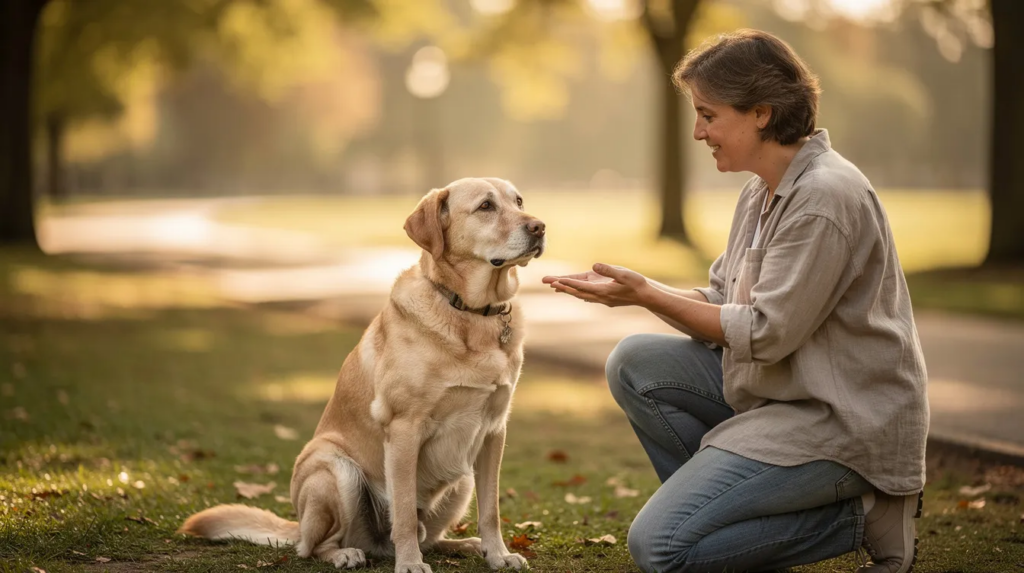
Yes, older dogs can be trained successfully in many cases. The right approach depends on the dog’s health, comfort level, motivation, and training history. Research on canine aging shows that older dogs may experience changes in learning, attention, memory, and problem-solving, but age does not automatically prevent training. Many older dogs can still learn when training is adjusted for their comfort, motivation, health, and pace.
Training older dogs can be effective because many adult dogs already understand household routines and may have more impulse control than puppies. At the same time, long-standing habits, discomfort, anxiety, or health changes can affect how quickly they learn. A puppy may learn fast, but may also jump, mouth, wander, or lose focus. Many older pets already understand a daily routine and read people well.
Older dogs may need more time to process new information, especially if they have age-related cognitive, hearing, vision, or mobility changes. Patience, clear cues, and short practice sessions help keep training fair and productive. With proper training, clear communication, consistent practice, and appropriate rewards, new behaviors are still possible.
Why Older Dogs May Need Training
Dogs age differently, but training needs often appear again in middle age and the golden years. A move, a new baby, a new walk route, other dogs in the neighborhood, or adopting an adult dog can reveal gaps in obedience training.
Common reasons dog owners seek senior dog training include:
- Leash pulling or poor leash manners on sidewalks, parks, or beach paths
- Unreliable recall around food, wildlife, guests, or distractions
- Jumping, pacing, or excessive barking
- Anxiety, reactivity, or mild aggression
- Inappropriate elimination or house manners that need refreshing, while also ruling out medical issues, discomfort, or age-related cognitive changes, with a veterinarian.
- Crate training for safer rest and routine
Training can help older dogs build better manners, reduce frustration, and replace long-standing habits with clearer expectations. Behaviors such as barking, house manners, leash issues, or reactivity should be approached carefully, especially if pain, anxiety, fear, or a medical issue may be involved.
A dog’s health matters too. Hearing loss, reduced vision, stiff joints, arthritis, and other health conditions can change how training should be done. Physical limitations in senior dogs, such as joint issues or sensory impairments, necessitate adjustments in training methods and expectations.
Training Skills That Help Older Dogs
A small set of basic commands can make daily life safer and calmer for both you and your canine companion. These skills also provide mental stimulation, which helps keep minds sharp and can support well-being.
- Sit: Helps your dog pause instead of jumping, crowding guests, or rushing doors.
- Down: Encourages calm behavior during vet visits, outdoor dining, or quiet time.
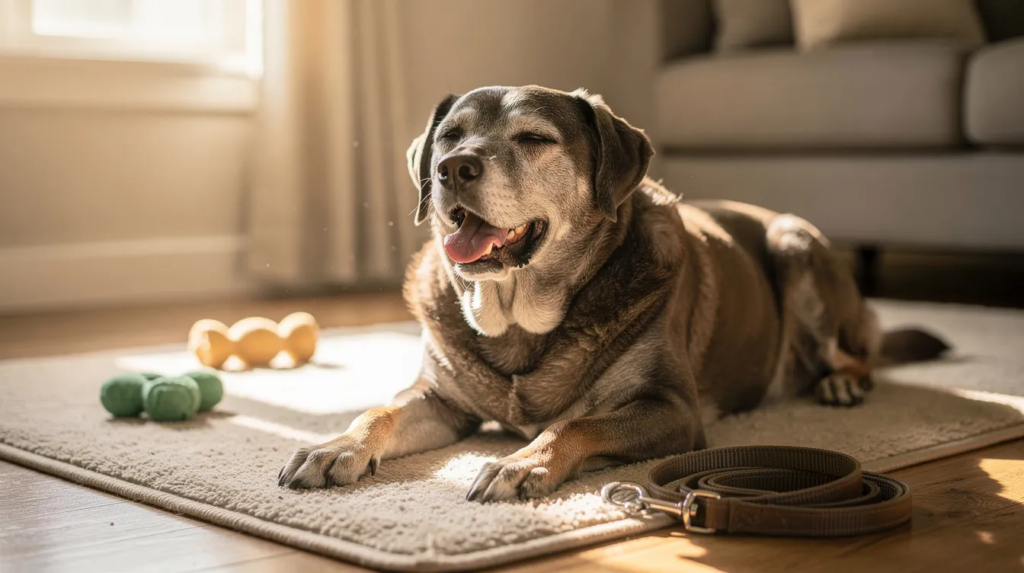
- Place: Teaches your dog to relax on a bed or mat. The place command can reduce pacing and give older dogs a predictable rest area.
- Heel: Builds safer walks and better balance when strength or stamina are concerns.
- Recall: A reliable come cue helps keep older dogs away from roads, wildlife, and distractions.
- Stay: Builds more self-control around doors, meals, and visitors.
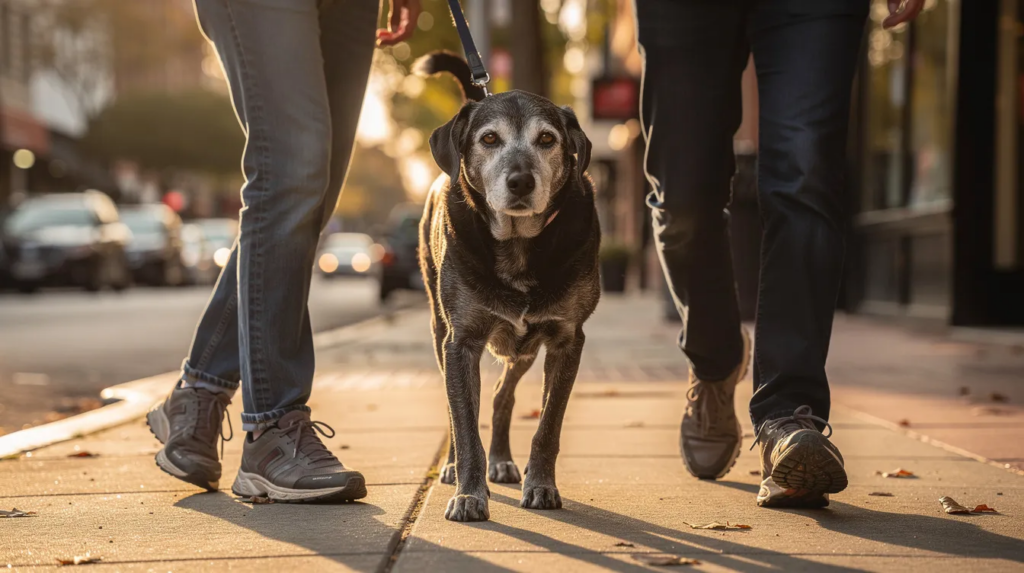
For heel and loose leash walking, start slowly. A senior dog with stiff joints may need soft ground, shorter routes, and fewer sharp turns. For recall, use high-value treats, a happy verbal cue, and a reward the dog likes. Gradually increase distance, then slowly add distractions.
How To Train An Older Dog Successfully
Training an older dog works best with a thoughtful training program that respects health, habits, and confidence.
- Check comfort first. Ask your veterinarian about the dog’s health before active exercise, especially with arthritis, heart issues, or mobility changes.
- Use positive reinforcement. Use treats, enthusiastic verbal praise, gentle play, and food rewards to mark the desired behavior. Using positive reinforcement techniques consistently is essential for training older dogs, as it helps build motivation and encourages them to learn at their own pace.
- Keep sessions short and frequent so your dog can stay focused without becoming tired or frustrated. Many older dogs do best with brief practice, rest breaks, and steady repetition throughout the day.
- Watch the clock. Many older dogs do best with 5 to 10 minutes of focused practice, one to three times daily. Some dogs can handle longer sessions, but stop before fatigue, stiffness, or frustration begins.
- Reduce strain. Older dogs often require modifications in their training due to physical limitations, such as joint pain or arthritis. Training should be conducted on non-slip surfaces to prevent accidents due to reduced stability in older dogs.
- Adjust cues. Utilizing hand signals for deaf dogs or touch cues and scent targets for visually impaired dogs is essential for effective training.
- Practice in real life. Incorporating training into everyday activities helps keep senior dogs engaged and mentally sharp while building a deeper connection with their owners.
- Add structure. Regular training provides a structured outlet for energy and reinforces familiar routines while introducing new challenges in a gentle and supportive way for older dogs.
Keep training sessions short, and keep sessions short enough that your dog can stay engaged. End with success, then take a break. Training provides valuable mental stimulation and can help older dogs stay engaged, confident, and connected to their owners. For senior dogs, gentle learning, enrichment, and routine may support quality of life, especially when paired with veterinary guidance when cognitive changes appear.
Common Mistakes To Avoid
Many owners feel behind when training older dogs, but rushing often slows progress. Avoid these common errors:
- Expecting puppy-speed results. Senior dogs may need time, patience, and repetition.
- Ignoring pain. Repeated sitting on hard floors can be unfair for a dog with stiff joints.
- Being inconsistent. Consistency is key when training older dogs, as it helps them feel secure and reduces stress, leading to a more predictable routine that enhances their comfort and happiness.
- Using harsh corrections. Scolding or physical punishment can reduce trust and make anxiety worse.
- Quitting too soon. Training older dogs requires patience, consistency, and a rewards-based approach to override ingrained habits.
- Forgetting fun. New tricks, gentle tricks, scent games, and calm practice can make training enjoyable.
Using positive reinforcement techniques is essential when training older dogs, as it helps motivate them and reinforces desired behaviors. Training sessions for older dogs should be kept short but frequent, allowing them to rest in between and stay motivated, which boosts their engagement.
Final Thoughts
Can older dogs be trained? Yes. Progress may be gradual, but it can be meaningful, especially when training focuses on comfort, safety, confidence, and calm behavior.
Older dogs can learn new things, replace bad habits, and enjoy good behavior in daily life. With dog training that is patient, consistent, and tailored to the dog’s needs, an older dog can build better manners and a stronger relationship with family.
Dog obedience, consistency, and confidence matter more than age. It is rarely too late to teach, practice, and help your dog feel secure. If you want support to improve obedience, confidence, and manners for your older dog, consider reaching out for professional guidance tailored to your pet’s needs.
FAQ
How long does it usually take to train an older dog basic obedience?
Many older dogs can learn sit, down, place, heel, and recall in several weeks to a few months. Daily practice usually matters more than age.
Deep habits, such as years of pulling during every walk, may take longer to replace with new skills.
Can an older dog with arthritis or joint pain still learn new tricks?
Yes, many dogs with arthritis can still learn new skills if training is low impact and approved by a veterinarian. Focus on eye contact, place, slow heeling, nose targets, or tricks done from a comfortable position.
Avoid repeated jumping, slippery floors, fast turns, and long drills.
Is it harder to house train an adult dog who was never taught before?
It can take consistency, but it is very possible. Use a predictable schedule, supervision, reward outdoor success, and consider crate training as a safe routine tool.
Avoid punishment after accidents. It can confuse older dogs and increase anxiety.
How often should I train my older dog each day?
Aim for one to three short training sessions per day, depending on energy and focus. Add quick practice before meals, at doors, during walks, or in the yard.
Stop before fatigue builds. A good session should feel successful for both you and your dog.
When should I consider professional training for my older dog?
Consider professional dog training if your dog has reactivity, anxiety, aggression, severe pulling, poor recall, or stalled progress at home.
A trainer can also help when family members use different rules or when the dog’s history is unknown.
