
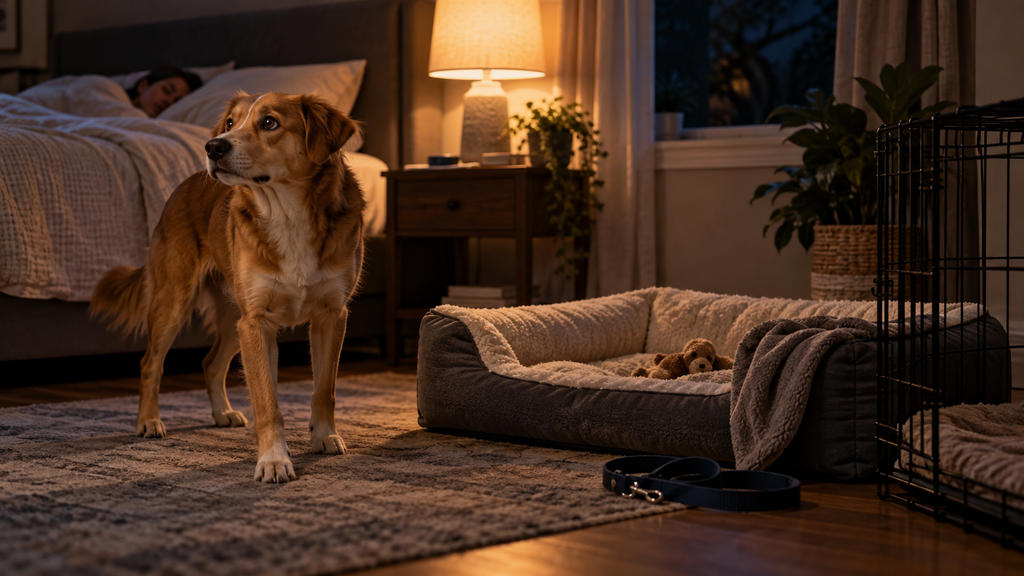
It’s late, the house is quiet, and your dog is still up. Maybe he’s pacing the hallway, whining at the door, or hopping on and off the couch. If your dog won’t settle at night, you’re likely both short on sleep and wondering what’s going on.
Nighttime restlessness has a few common causes. Some are training and routine issues you can work on at home. Others are better checked by a veterinarian. This guide helps you tell the difference.
Why a Dog Won’t Settle at Night
Training and Routine Causes
These are often the easiest to improve with structure and practice.
- Excess energy: Too little exercise or enrichment can leave a dog restless in the evening.
- Inconsistent routines: If bedtime changes every night, your dog may not know when it’s time to relax.
- Overstimulation: Late play sessions, zoomies, or a busy household can keep a dog wired.
- Lack of structure: Dogs who haven’t learned to settle may not know how to switch off.
- Attention-seeking: If whining or pacing gets a response, even a scolding, it can become a habit.
- Environmental distractions: Outside noises, lights, or sleeping spots in a busy area can keep a dog alert.
- Anxiety: Some dogs feel unsure at night, especially after changes in routine or environment.
When a Veterinarian May Be Appropriate
Not every case is behavioral. Talk with your vet if:
- The restlessness is sudden or new
- Pacing happens most nights for several days
- Your dog seems uncomfortable, pants, or whines in a way that doesn’t fit his usual behavior
- Your dog is older and seems confused, disoriented, or restless in new ways
- Your dog has other changes, such as appetite, bathroom habits, or energy
A vet can rule out pain, discomfort, and other health concerns. If your dog gets a clean bill of health, training and routine changes become the next step.
Signs of Nighttime Restlessness
- Dog pacing at night or circling without settling
- Whining, sighing, or repeated attention-seeking
- Getting up and down, in and out of the bed or crate
- A dog who won’t sleep and follows you around
- Bursts of energy right before bedtime
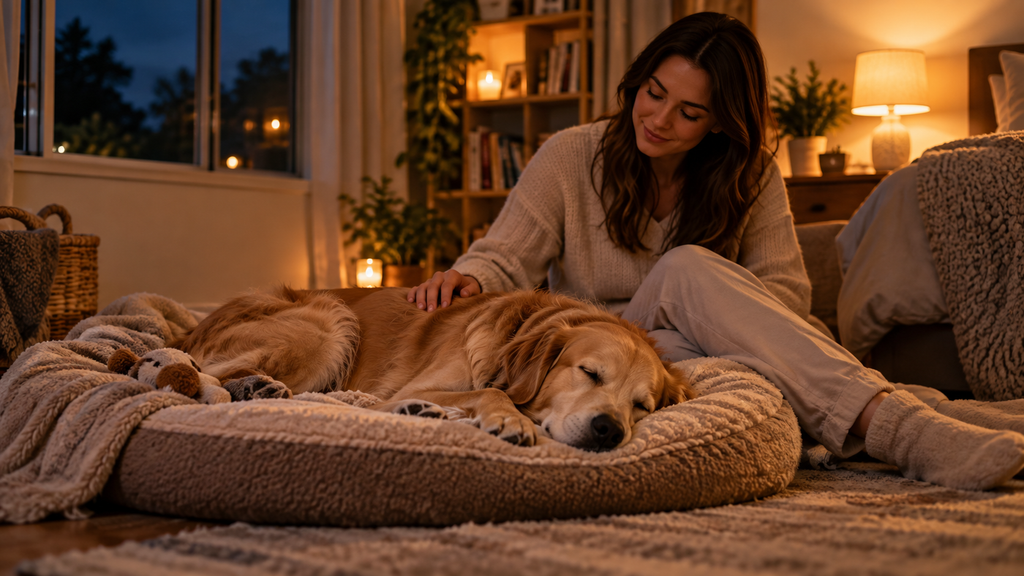
Practical Steps for Calming a Dog at Night
Improve Daily Exercise and Enrichment
Aim for a good mix of physical activity and mental work during the day. Walks, sniffing time, short training sessions, and food puzzles all help. Be careful with high-energy play late in the evening, since it can leave some dogs more amped up.
Build a Consistent Dog Bedtime Routine
A predictable routine tells your dog what’s coming.
- Take a final walk or potty break at about the same time each night
- Dim the lights and lower the noise
- Offer a calm activity, like a chew
- Guide your dog to his bed or crate
- Use the same cue and sequence every night
Reinforce Calm Behavior
Reward your dog for lying down and staying relaxed. Quietly drop a treat on the bed when he settles, rather than reacting when he paces. This teaches your dog that calm behavior pays off.
Use Place or a Crate Routine Appropriately
Place gives your dog a clear spot to settle. Practice during the day, when your dog is already calm, and add the evening routine once he understands it. If you use a crate, make it a comfortable, positive space and introduce it gradually. A crate should never be used as punishment.
Reduce Late-Night Stimulation
- Keep evenings low-key
- Turn off TVs and bright lights where your dog sleeps
- Limit noise and activity near his sleeping area
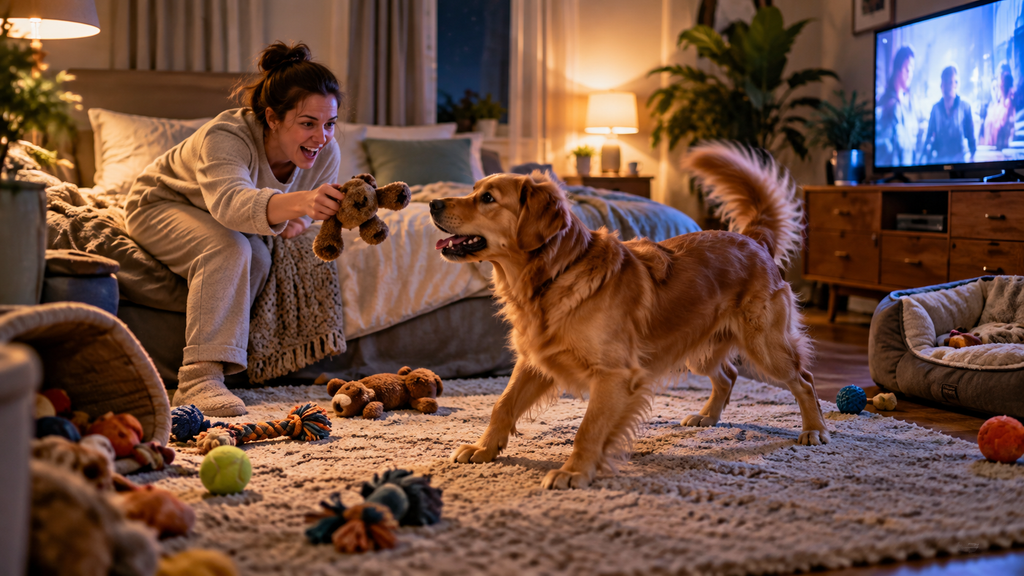
- Avoid rowdy play or exciting greetings close to bedtime
Handle Nighttime Attention-Seeking Calmly
If your dog is up and you’ve ruled out needs like a potty break, keep interactions quiet and brief. Avoid scolding or turning it into a game. Consistency helps your dog learn that nighttime is for resting.
Common Mistakes to Avoid
- Assuming more exercise always fixes it
- Playing hard right before bed
- Changing bedtime and sleep spots often
- Giving attention each time your dog gets up
- Using the crate as punishment
- Ignoring sudden changes in behavior
Frequently Asked Questions
Why is my dog restless at night all of a sudden?
A sudden change can be a sign of discomfort, stress, or a shift in routine or environment. If it continues for more than a night or two, or comes with other changes, check in with your veterinarian. If your dog is healthy, review recent changes and bedtime habits.
Will more exercise help my dog sleep through the night?
Daytime activity helps, but more isn’t always better. High-energy play late in the evening can keep some dogs wired. A balanced mix of exercise, enrichment, and calm wind-down time tends to work best.
Should I put my dog in a crate or use a place routine at night?
Either can work if your dog is comfortable with it and has been trained gradually. The goal is a positive, consistent spot for rest. A trainer can help you choose and teach the option that fits your dog and home.
How do I know if it’s training or a health issue?
If the restlessness is new, intense, long-lasting, or paired with signs of discomfort, talk with your vet first. If a vet finds nothing, routine, structure, and training are a good next focus. A professional trainer can help you sort through behavior patterns.
Final Thoughts
When a dog won’t settle at night, the cause is often a mix of routine, energy, and learned habits, with an occasional health factor mixed in. Rule out medical concerns when needed, then build a calm evening routine, reward relaxed behavior, and keep things consistent. If nighttime restlessness seems tied to ongoing behavior or obedience problems, a professional trainer can help you build a plan that fits your dog and your household.
