
Key Takeaways
- Dogs dig for many reasons, including boredom, prey drive, temperature regulation, and escape. Dog digging is a natural behavior driven by specific instincts, not spite.
- Punishment after the fact rarely works because dogs do not connect it to earlier digging holes in the yard.
- Daily physical exercise and mental stimulation are essential for reducing boredom-driven digging behavior.
- Obedience skills like recall, place, sit, down, and leave it allow owners to interrupt and redirect digging in real time.
- Sudden, intense, or frantic digging can sometimes signal stress, anxiety, pain, fear, or a change in the dog’s environment. If the behavior appears suddenly or comes with other changes, a vet check and professional training support may be helpful.
Introduction
If you are searching for how to stop a dog from digging, you are not alone. Dog digging holes across the lawn, through garden beds, and under the fence is one of the most common complaints among dog owners, and for good reason. Coming home to discover craters in a carefully maintained backyard is frustrating.
The good news is that most dogs dig for understandable causes, and the behavior can be improved. To stop dogs from digging, you must identify the underlying reason and then apply the right combination of structure, supervision, and consistent dog obedience. This post covers practical steps you can start today. No magic fixes, no unrealistic promises, just clear strategies that work when applied with patience.
Why Dogs Dig Holes
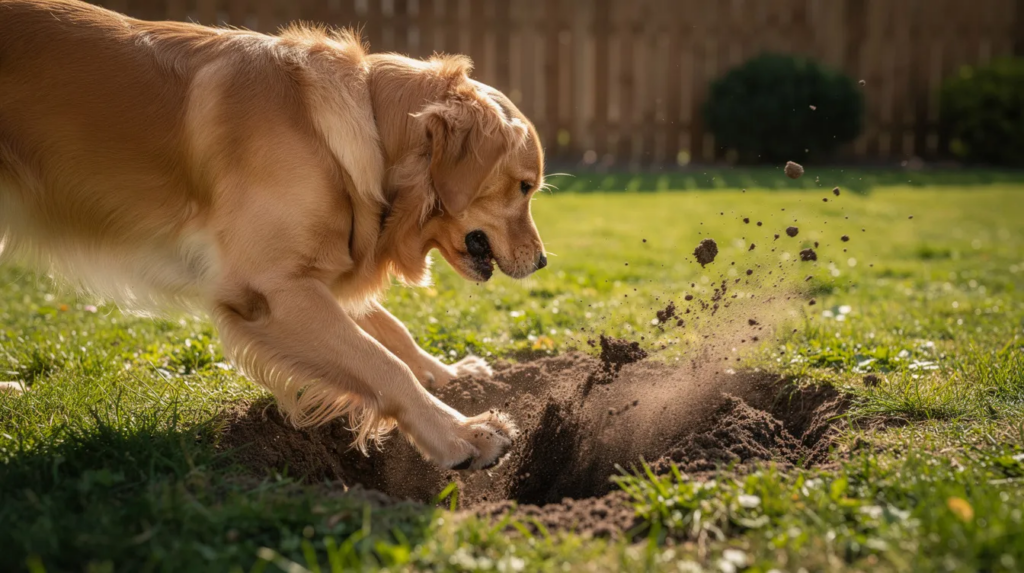
Digging is a natural behavior rooted in canine instinct. In the wild, dogs dig to create shelter, cache food, and hunt prey. Modern dogs carry the same wiring, especially in a yard full of soft dirt, shade, and interesting smells.
Here are the most common reasons dogs dig:
- Boredom and excess energy. Dogs dig to escape boredom when left alone in the yard with nothing to do. This is one of the most frequent triggers, especially for younger dogs and high-energy breeds that need more exercise and more playtime.
- Prey drive. Some dogs dig near tree roots or flowerbeds while hunting rodents or insects. Rats, grubs, and other animals underground trigger a deep instinct to hunt. Dogs are highly motivated by scent, and if they notice movement, smells, or sounds near roots, mulch, or soil, they may start digging to investigate.
- Temperature regulation. Dogs may dig to create a cooler resting spot in hot weather. In a hot Florida backyard, creating a shallow pit in shaded dirt is a dog’s version of air conditioning.
- Escape attempts. Dogs dig along fence lines out of curiosity or anxiety, sometimes to chase other animals or simply to roam the world beyond the yard.
- Stress and anxiety. Separation anxiety, storm phobia, or general stress can cause obsessive digging, often paired with pacing, barking, or whining.
- Exploration. Puppies and younger dogs are prone to experiment with digging holes simply because it is fun and nobody has taught them otherwise.
Some breeds, like terriers, are instinctively prone to digging. They were bred to go underground after prey, so the behavior is hardwired. Of course, any breed can develop a digging habit if the conditions are right.
How To Stop Dog From Digging With Better Structure
Structure means a predictable daily routine that includes supervised outdoor time, proper exercise, rest, and training. Think of structure as a clear daily routine that gives your dog fewer chances to practice unwanted digging and more chances to make better choices.
Limit unsupervised access. When a digging dog has free, unsupervised access to the backyard for hours, the habit gets stronger. Every hole dug is a trap of self-reinforcement. Instead, supervise outdoor time and keep sessions purposeful.
Schedule physical exercise. Most dogs benefit from daily physical activity, but the right amount depends on age, breed, health, and energy level. Brisk leash walks, fetch, tug, or structured play can help reduce extra energy that may contribute to digging, especially for young or high-energy dogs.
Add mental stimulation. Add mental stimulation. Mental stimulation can be just as important as physical exercise for many dogs. Short training sessions, scent games, puzzle feeders, and search games can give your dog a productive outlet before outdoor free time.
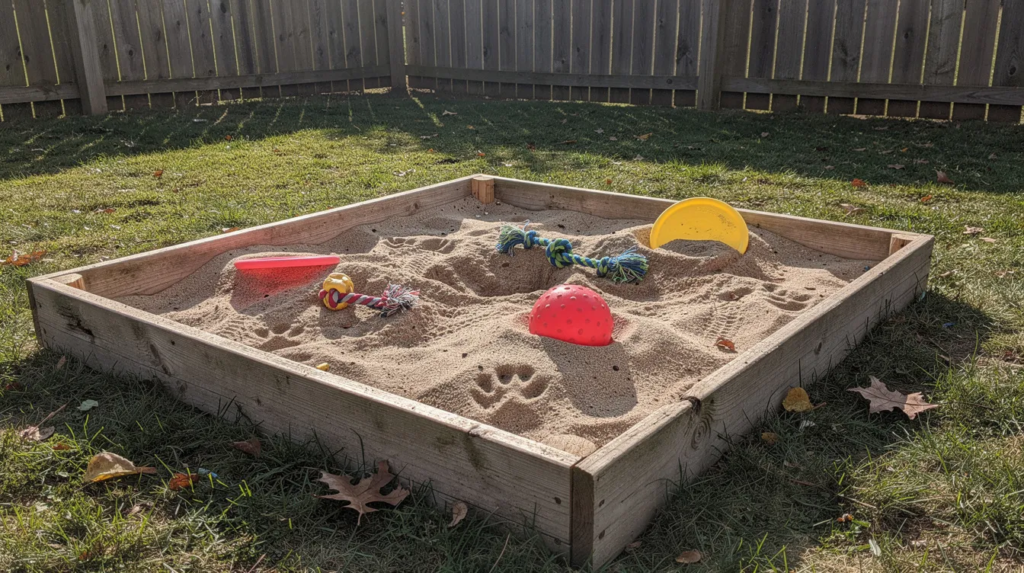
Create a designated digging zone. A digging pit can redirect a dog’s natural digging behavior to an acceptable spot. Use a sandbox or dirt area filled with loose soil or sand, make it large enough for your dog to dig comfortably, and place safe toys or treats there to encourage your dog to use that spot instead of the lawn or garden.
Use barriers wisely. If your dog digs along the fence, block access with safe, secure barriers and remove the reason your dog is trying to escape. Options may include buried fencing at the base of the fence, large partially buried rocks along the fence line, or fencing off garden beds. Make sure any wire edges are rolled away from the yard and cannot injure your dog’s paws.
Provide shade and water. Provide shade and water for dogs in hot weather. If your dog is digging to cool off, a shaded shelter and fresh water are a simpler solution than fighting the behavior head-on.
Build a predictable routine. Take your dog outside on leash, allow time for a bathroom break, practice a short obedience or play session, then allow supervised free time. This replaces hours of unattended roaming with more structured outdoor access.
Training Skills That Help Reduce Digging
Reliable dog obedience is what allows you to actually interrupt digging in the moment and redirect your dog toward acceptable behaviors. Without trained cues, you are left shouting across the yard with no response.
- Recall. A solid recall command lets you call your dog away from a hole before the behavior continues. Practice in low-distraction areas first, then gradually work up to the yard where digging usually happens.
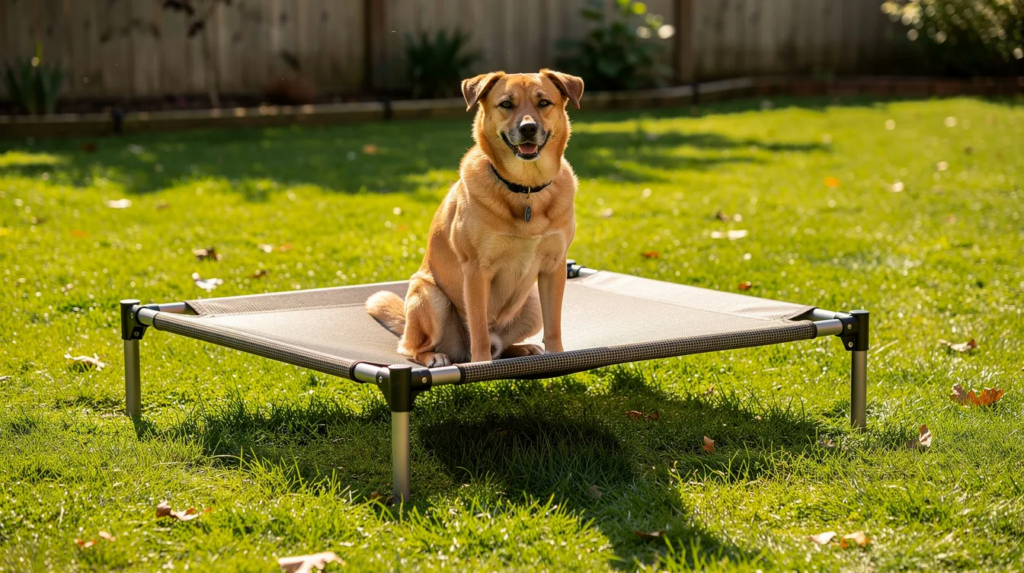
- Place command. Teach the dog to relax on a bed, mat, or raised cot after active outdoor time. This gives the dog a clear alternative to scanning the lawn for the next digging area.
- Sit and down. These simple positions help the dog pause, calm down, and refocus when they start targeting a spot. They act as a mental break before the digging habit kicks in.
- Leave it. Teaching commands like “Off or leave it, depending on the training program” can help redirect attention away from digging. This is especially valuable when your dog zeroes in on a specific area like the base of a fence or a flower bed.
Keep training sessions short (5 to 10 minutes, two to three times daily) and start in low-distraction areas before practicing in the yard where digging usually occurs. Engaging dogs in games like fetch, tug, and search during these sessions can reduce boredom-related digging. Use food, toys, or praise as rewards, and keep sessions calm so the dog learns to think rather than just react.
A long line attached during yard training lets you gently guide the dog away from digging spots and help them succeed. Many dogs improve when owners stay consistent, but the timeline depends on the cause of the digging, the dog’s history, and how often the behavior has been practiced. Focus on steady progress rather than a quick fix.
Common Mistakes To Avoid
Avoiding a few common mistakes can save time, frustration, and damage to your lawn.
- Punishing after the fact. Scolding the dog when you discover a hole hours later does nothing productive. Dogs cannot connect delayed punishment to earlier behavior. This is one of the most common things owners get wrong, and it often increases stress without changing the habit.
- Relying only on physical exercise. Long runs alone will not stop digging if mental stimulation is missing. Mental stimulation is as important as physical exercise. You can end up with a super fit dog that still digs because it has nothing to think about.
- Leaving dogs unsupervised for long periods. Without supervision, toys, training, or interaction, the dog will discover that digging is the most entertaining option available. Every unsupervised session is a chance for the behavior to get stronger.
- Harsh deterrents. Yelling, forcing the dog toward the hole, or using any training tool incorrectly can increase stress and confusion, especially if the digging is linked to fear, anxiety, or escape attempts. Focus on supervision, redirection, rewards, clear commands, and a consistent routine so your dog understands what to do instead.
- Only filling holes. Filling holes without changing the routine simply leads to the dog choosing a new spot. Address the root cause, not just the symptom.
- Ignoring health signals. Sudden changes in digging behavior combined with weight loss, lethargy, or other signs may need a vet check. Don’t wait to rule out medical issues.
When Digging May Signal Anxiety or a Bigger Behavior Issue
While many dogs dig for fun or comfort, intense or compulsive digging can signal a deeper problem. If your dog frantically digs at doors, crates, or fence lines when you leave, or during storms and fireworks, anxiety is likely the driver.
Dogs with separation anxiety may pair digging with howling, destructive chewing at exits, drooling, or repeated attempts to escape the yard. These dogs are not acting out. They are in distress. A dog that keeps digging under the fence to escape, even after improvements in exercise and structure, may need focused behavior training rather than more barriers.
Document when the dog digs. Note the time of day, weather, who is home, and what sounds are present. Patterns often reveal the trigger and help you build a more effective plan. If the dog’s overall behavior or health has changed, consult a veterinarian first to rule out medical causes.
When Professional Training May Help
Some digging problems are persistent or tied to broader obedience and behavior concerns. When the dog treats your backyard like a construction site despite your best efforts, professional help is a practical next step.
help identify likely triggers. instead of guessing and help build a plan around the dog’s routine, environment, stress level, and obedience skills. Structured private lessons or focused behavior training programs help owners build reliable recall, place, leave it, and calmness around outdoor distractions. A good sign of progress is when your dog can hold a calm down-stay in the yard, respond to recall, or move away from the fence when asked
Board-and-train programs Professional training programs can be especially helpful for busy owners or for dogs with several issues, such as jumping, pulling, poor recall, outdoor distractions, and digging combined. Depending on the dog’s needs, a trainer may recommend private lessons, board and train, or behavior-focused training. Professional guidance can help owners avoid common mistakes and build a clear plan for better control and consistency.
If your digging dog is hard to control outdoors or the behavior is causing family stress, reaching out for skilled help is a wise step.
Final Thoughts
Understanding how to stop dog from digging comes down to identifying the cause and building a plan around structure, exercise, training, and consistency. There is no single solution that works overnight, but the combination of proper exercise, mental stimulation, supervision, and reliable obedience skills will make a real difference.
Be patient and celebrate small improvements. Fewer holes in the yard, quicker response to recall, and a dog that chooses its dig pit over your garden are all signs of progress. A dog-training-focused sentence. your dog will follow the patterns you train into its routine.
If you need guidance with obedience, structure, or managing outdoor behaviors, consider reaching out to a qualified dog trainer who can provide tailored support and professional guidance to help you and your dog succeed together.
FAQ
These questions address common concerns that go beyond the main article. Each answer focuses on practical steps for real-world scenarios.
How long does it usually take to stop a dog from digging?
Simple boredom-related digging can improve within two to four weeks if you consistently add more exercise, mental stimulation, and supervision. Habit-based or anxiety-linked digging may take several months of steady structure and training to fully resolve. Consistency matters more than speed. Don’t expect to respond overnight, but do track progress weekly.
Is it okay to let my dog dig in one designated spot?
Yes. Many dogs do well with a designated digging area, such as a sand pit or dirt box, where they are encouraged to dig. Keep the soil loose, mark the acceptable spot clearly, and occasionally hide safe toys or treats there so your dog naturally prefers it over the rest of the yard.
What if my dog only digs at night?
Nighttime digging can be linked to wildlife sounds, cooler temperatures, rodents, or anxiety when the house is quiet. Supervise evening potty trips on leash if needed, and provide more daytime exercise, training, and enrichment so your dog is calmer at night.
Can a lack of exercise really cause that much digging?
Yes. Lack of exercise can contribute to digging, especially in young or high-energy dogs. Track your dog’s activity for a week, then gradually increase both physical exercise and mental games to see whether the digging decreases.
Will my dog grow out of digging on their own?
Some dogs dig less as they mature, but many keep the habit if it has been rewarding and never addressed through training. A dog that has spent months creating holes in the yard is not likely to stop on its own. Proactive training and structure give much better odds of reducing digging than simply waiting. Waiting and hoping usually does not solve a digging habit. Proactive training, supervision, structure, and redirection give you a better chance of reducing the behavior.
