Signs Your Dog Needs Professional Obedience Training
Key Takeaways
- Warning signs include ignoring commands, chronic leash pulling along Scenic Highway 30A, jumping on guests, reactivity in public, and poor recall on the beach.
- Normal puppy mistakes differ from ongoing, unsafe behavior patterns that persist past 6 to 9 months of age despite consistent daily practice.
- Professional obedience training improves communication, safety, and calm behavior in real-world 30A environments like beach paths, restaurants, and neighborhood walks.
- Seeking professional help from Off Leash K9 Training 30A is responsible care, not a sign of failure or having a bad dog.
- Aggression, extreme fear, and separation anxiety require professional intervention and should never be ignored.
Why Obedience Training Matters Beyond “Sit” and “Stay”
Obedience is about real-life reliability. A well trained dog comes away from Highway 98 traffic, ignores distractions on Grayton Beach, and calmly greets visitors without chaos.
Modern professional training focuses on emotional stability, impulse control, and confidence rather than just command words. A trained dog is safer, easier to live with, and less stressed because it understands clear rules and expectations. Dogs thrive when they know their role within the family structure.
Off Leash K9 Training 30A specializes in distraction-proof, off-leash obedience designed for busy, high-distraction areas along the Florida Panhandle.
What a Well-Trained Dog Looks Like in Everyday Life
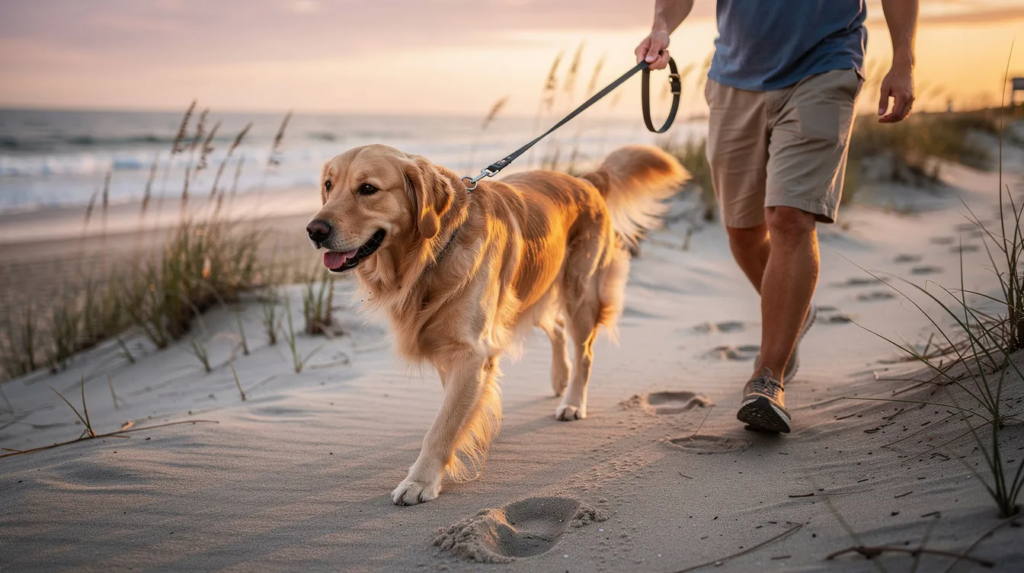
Picture a well-behaved dog walking calmly along 30A, relaxing at an outdoor café in Seaside, and coming when called on a quiet stretch of beach. This reliability shows up during daily routines: walks, guests arriving, doorways, feeding time, and kids playing.
Consistency across locations matters. A well behaved pet performs the same at home, in the neighborhood, at parks, and at pet-friendly businesses in Santa Rosa Beach.
Key Signs of a Well-Trained Dog
- Prompt response to name in various situations
- Loose-leash walking without dragging you forward
- Waiting at doors and gates until released
- Settling on a bed or designated spot when asked
- Handling gentle touch to paws, ears, and collar without struggle
- Remaining reliable even with distractions like bicycles, other dogs, and kids on scooters
- Quick recovery after being startled, refocusing on the owner
Owners of well-trained dogs feel relaxed taking their pet in public rather than anxious or embarrassed.
Common Dog Obedience Problems That Signal It Is Time for Help
Many warning signs start small. A little pulling here, occasional ignoring there. These slowly become daily habits if not addressed. When the same problems keep returning despite treatments, online videos, or group classes, it is often a sign to involve a professional trainer.
Each of the following problem areas can be improved with proper training tailored to the dog and household.
Ignoring Commands or Acting Like Cues Are “Optional”
Regularly ignoring basic commands like “come,” “sit,” or “leave it” after 6 to 9 months of age is a key sign your dog needs professional obedience training. This is especially concerning outside the house.
A dog that listens indoors but refuses to come away from other dogs at the Ed Walline beach access, or chases birds instead of returning, demonstrates a generalization problem. If you have tried consistent daily practice for at least 4 weeks with little improvement, a trainer should evaluate your approach and timing.
Off Leash K9 Training 30A focuses on distraction-proof recall to keep dogs safe around roads and water.
Leash Pulling, Lunging, and “Bucking Bronco” Walks
Chronic leash pulling looks like sore shoulders, tangled leashes, and embarrassment passing other dogs or joggers along Scenic Highway 30A. This differs from mild puppy pulling during the first few weeks of walks.
Safety risks include being pulled into the street, dragged toward wildlife, or knocked over on uneven paths. If walking feels like a daily struggle, or you avoid walking at busy times because of your dog, professional help is warranted.
Jumping on People and Over-Excited Greetings
An enthusiastic greeting is normal for puppies. Repeated jumping on children, guests, or delivery drivers is a red flag requiring attention.
Consider a 60-pound dog leaping on grandparents visiting for Thanksgiving or bowling over kids during a July 4th barbecue in Santa Rosa Beach. Home practice often fails when excitement is high. Professional trainers teach dogs a reliable “sit to greet” or “place” command.
If visitors dread entering your home because your dog jumps, structured obedience training is overdue.
Excessive Barking, Whining, or Vocal Reactivity
Normal alert barking differs from constant barking at every sound, person, or dog walking past the yard or condo balcony. Warning signs include:
- Barking for long periods when left alone
- Vocalizing at hallway noises
- Exploding at other dogs from behind a fence
Persistent noise complaints from neighbors, HOA warnings, or resort management calls strongly indicate professional help is needed. Off Leash K9 Training 30A addresses both the obedience side (quiet cues, impulse control) and emotional factors like anxiety and frustration.
Poor Recall and Off-Leash Problems Near Distractions
Recall is a critical safety skill in the 30A area where dogs may be near water, bikes, golf carts, and busy roads. Dogs that bolt out the front door, ignore recall at a beach house rental, or chase wildlife in Point Washington State Forest create genuine liability concerns.
If your dog only comes when it wants to, or you must always use a long line because recall is unreliable, professional training is highly recommended. Off Leash K9 Training 30A specializes in reliable off-leash obedience with strong distractions.
Impulse Control Problems: Stealing Food, Bolting, and Ignoring Boundaries
Poor impulse control includes counter-surfing for food, dashing through doors, grabbing kids’ toys, and demanding attention with paws or barking. Examples include a dog rushing out of a condo door into the hallway or snatching food from an outdoor table during a family cookout.
While puppies naturally explore, older dogs continuing such behaviors after repeated corrections usually lack a structured obedience foundation. When constant management fails and the dog seems unable to settle or wait, professional obedience training is the answer.
When Normal Training Struggles Become Professional Dog Training Signs
All dogs make mistakes, and some trial and error is normal during the first few months. The key difference is whether problems are gradually improving or getting worse.
Patterns That Suggest Home Training Is Not Enough
- Repeating the same correction daily without improvement
- Needing to shout or repeat cues multiple times
- Only getting obedience if food is visibly in your hand
- Family members handling the dog differently, with inconsistent results
- The dog behaves perfectly in group class, but “forgets” everything at home
If a behavior has stayed the same or worsened for 30 days despite consistent effort, professional intervention is appropriate.
Safety, Liability, and Stress Considerations
High-risk signs include near-miss incidents with cars, conflicts with other dogs showing escalating patterns, or nipping at visitors when over-excited. Legal and financial risks exist if a dog bites, knocks someone down, or damages property in a vacation rental.
Constant worry about what your dog might do in public signals that structured guidance from a professional dog trainer is needed.
Behavior Issues That Should Never Be Ignored
Some behaviors move beyond “annoying” into serious territory. Aggression, extreme fear, and severe reactivity involve emotional and environmental factors beyond basic obedience problems.
Growling, Snapping, and Biting Incidents
Specific warning signs include:
- Growling when someone approaches the couch
- Snapping around the food bowl
- Biting during nail trims or vet handling
- Territorial behavior toward visitors
Even one bite or serious snap is a clear sign to involve a professional rather than hoping it resolves. Punishment without a plan can worsen fear or aggression. Document incidents with dates, triggers, and intensity to share during consultation.
Extreme Fear, Shutdown, or Panic Responses
Signs include shaking during storms, refusing to walk past certain places, hiding from visitors, or panicking when left alone. Untreated fear can develop into phobic behavior affecting daily life.
Seek professional help if fear has limited where you can take your dog or what activities you can do together for more than a month. Behavior modification includes controlled exposure and confidence-building strategies.
How Professional Obedience Training Helps Your Dog and Your Family
Structured training creates a calmer home, safer outings, and a stronger bond between dog and owner. Professional trainers provide a clear step-by-step plan instead of scattered internet advice.
Improved Communication and Consistency
A trainer standardizes cues, hand signals, and rules so every family member handles the dog the same way. This consistent structure reduces confusion and frustration for both you and your dog.
Real-World Reliability Around 30A Distractions
Training incorporates common local distractions: beach crowds, bicycles, other animals, and restaurant patios. Board-and-train programs offer intensive daily practice so dogs generalize skills quickly.
Support for Owners, Not Just the Dog
Training includes coaching owners on leash handling, timing of rewards using positive reinforcement, and reading body language. Owners leave training sessions with simple homework routines suited to their schedule.
When to Hire a Dog Trainer in the 30A / Santa Rosa Beach Area
You do not need to wait for a disaster to get help. The best time is when you first notice patterns forming. Criteria for timing include:
- Negative behavior lasting more than a month
- Repeated near-misses
- Home training failing after consistent effort
Puppies, newly adopted dogs, and adult dog companions can all benefit at any age.
Choosing the Right Type of Training Program
| Program Type | Best For |
| Private lessons | Owners wanting deep involvement with time for daily practice |
| Board-and-train | Busy families, dogs with multiple problems, fast reliable change |
| Behavior modification | Aggression, reactivity, underlying issues beyond basic obedience |
Off Leash K9 Training 30A offers free phone consultations to match dog owners with the most suitable program.
How Off Leash K9 Training 30A Can Help
Off Leash K9 Training 30A serves Santa Rosa Beach and surrounding Florida Panhandle communities with specialized off-leash obedience, distraction training, and real-world reliability for family dogs.
Programs Designed for Real Families and Real Environments
Services include:
- Puppy consultations for a new puppy
- Private obedience lessons
- 2 and 3 week board-and-train programs
- Behavior modification for aggression and reactivity
Each program includes owner education sessions and clear homework. Goals include loose leash manners on neighborhood routes, calm behavior with guests, and dependable recall off-leash.
Next Steps if You See These Signs in Your Dog
- Observe your dog for a week and note recurring issues
- Make a short list of the top 3 problems you want solved
- Schedule a free phone consultation with Off Leash K9 Training 30A
- Ask about timelines, typical training days, and how results transfer home
With consistent structure and the right structured guidance, an under-trained dog can become a reliable, enjoyable companion. Many dog owners find the entire process transforms their relationship with their pup.
Frequently Asked Questions
How do I know if my dog’s behavior is just a phase or a real problem?
Short-lived behaviors during transitions like moving homes or adolescence, around 7 to 10 months can be normal if they slowly improve. If a behavior has stayed the same or worsened for 30 days despite daily practice, it is more than a phase and needs a structured plan. Track dates and frequency to see if real progress is occurring.
Can I fix my dog’s obedience problems on my own with online videos?
Online resources help with simple skills like teaching “sit” in a quiet living room. Complex problems like aggression, chronic pulling, or unsafe recall require in-person evaluation. Professional trainers identify subtle issues with timing, body language, and environment that videos cannot address.
At what age is best to start professional obedience training?
Puppies can start foundational training as early as 8 to 10 weeks, focusing on basic cues and socialization. An adult dog can also learn new behaviors, though they may need more repetition for bad habits. It is never too late to build confidence and improve obedience.
How long does professional obedience training usually take to show results?
Some improvements in focus and good behavior appear within 1 to 2 weeks of consistent training. Full reliability around serious distractions takes several weeks to months, depending on the program. Board-and-train programs are designed for noticeable results in 2 to 3 weeks, followed by owner practice at home.
Will obedience training change my dog’s personality?
Good training does not remove playfulness or joy. It channels energy into appropriate behaviors. The goal is a dog that can be lively when invited and calm when asked. Many dog owners report their dogs seem happier once they understand clear rules and their role in the family.