
Key Takeaways
- The place command teaches your dog to go to a designated spot like a bed, cot, or mat and remain calm until you give a release cue, creating a reliable “home base” for relaxation.
- Place helps reduce jumping, door rushing, begging, and pacing by giving your dog a clear job during busy times like guests arriving or dinner time.
- Unlike a basic down command, place provides a physical boundary that makes rules easier for your dog to understand and follow.
- Calm behavior at home comes from clear teaching and consistent follow through, not a quick fix or single training session.
- Off Leash K9 Training 30A helps dog owners in the 30A and Santa Rosa Beach area build reliable, calm behavior through private lessons and board and train programs.
What Is the Place Command?
The place command is one of the most practical skills you can teach your dog. In simple terms, it means sending your dog to go to their place, a specific object like a dog bed, elevated cot, or mat, and stay there calmly until you release them.
Your dog can sit, lie down, stand, or simply relax on the object. The only rule is that all four paws stay on the surface and your dog remains settled.
Common place objects include:
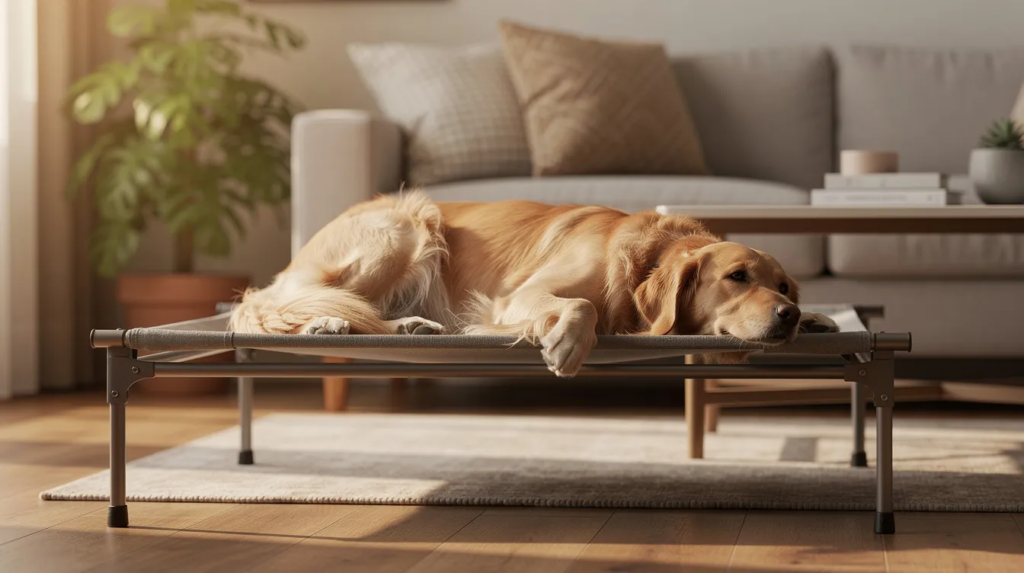
- An elevated cot that gives your dog a clear, defined surface
- A thick dog bed in the living room
- A washable mat near the kitchen
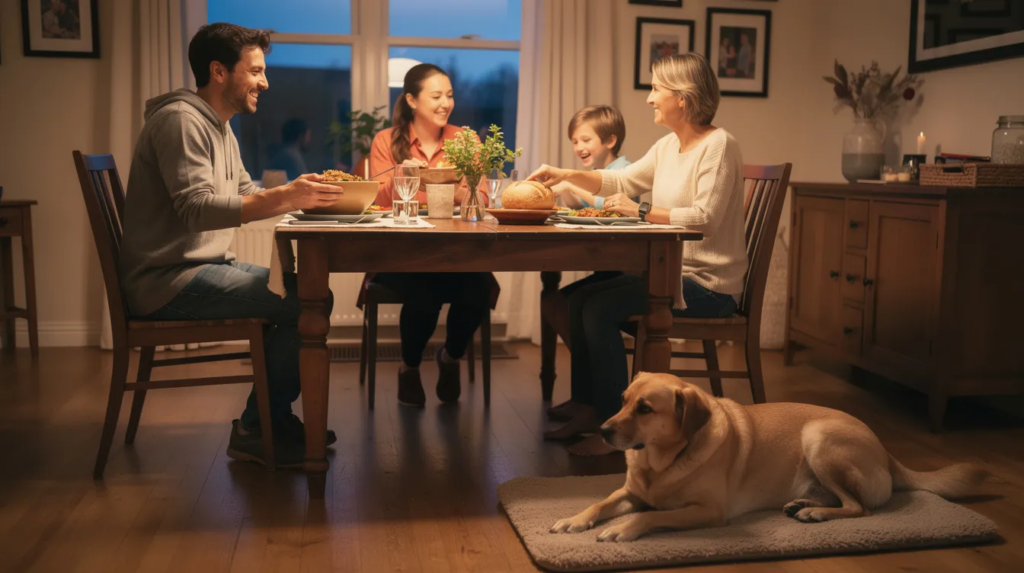
Picture a family in Santa Rosa Beach sending their dog to a raised cot while they eat dinner or answer the door. The dog understands exactly where to be and what to do. Dogs of many ages and breeds can learn place, from a young puppy building early structure to an older rescue dog just starting training.
Place Command vs Simply Telling Your Dog to Lie Down
Many dog owners wonder why they need a place when they already use “down.” While these commands are related, they teach very different things.
- Down is a single position your dog can perform anywhere, usually for short bursts.
- Place adds a physical boundary and a clear job, making rules much easier for your dog to understand.
A down command often breaks easily when there is movement or activity around your dog. A well-behaved dog with a strong place command learns to stay put through distractions because the boundary is obvious.
Consider the difference between asking for “down” in the middle of a busy kitchen versus sending your dog to place on a mat while you cook. One leaves your dog guessing where to be. The other gives crystal clear expectations.
Why Dogs Need a Clear Job Inside the Home
Many problem behaviors at home come from too much freedom and too little direction. Modern dogs live in busy homes with visitors, children, door deliveries, and constant activity. Without guidance, dogs often “self manage” by:
- Pacing through the house
- Barking at windows
- Following your every step
- Jumping on people
- Stealing food from counters
A clear job like “go to your place and relax” provides structure, boundaries, and predictability. This reduces anxiety and pushy behavior because your dog knows exactly what is expected.
Think about a family movie night in a 30A beach rental. Instead of pacing and begging for popcorn, a dog with a solid place command settles on a cot and decompresses. Place is not a punishment corner. It is a mental “clock out” space that helps your dog shut their brain off.
How Place Command Builds Calmness, Structure, and Impulse Control
Calm behavior is a skill that can be taught, not just hoped for. The place command is one of the main tools we use to build it.
- Calmness: Extended time on place teaches a dog to bring their energy down and be still around normal household noise.
- Structure: Consistent rules like “on your place during meals” create predictable routines your dog learns to follow.
- Impulse control: Waiting on place while people eat or visitors enter teaches self control and patience.
- Boundaries: Place gives a clear physical line your dog should not cross, cutting down on crowding, nudging, and door charging.
Imagine a dog resting on an elevated cot near a sliding door while kids run in and out to the pool. Instead of sprinting through the doorway, the dog understands their job is to stay put.
Everyday Situations Where Place Command Is Invaluable
Here are real scenarios where place becomes a game-changer:
| Situation | How Place Helps |
| Guests arriving | Send your dog to place before opening the door to stop jumping and barking at visitors |
| Mealtime | Dog remains on place during breakfast and dinner instead of circling the table |
| Cooking | Dog goes to a mat while you use the stove, so you are not tripping over them |
| Doorbell rings | Dog automatically heads to place instead of racing to the threshold |
| Work from home | Dog relaxes on place near your desk during Zoom calls |
| Family time | Dog stays on place during game night while children play on the floor |
These small wins add up to a much more peaceful household routine.
How Place Helps Anxious, Excitable, or Pushy Dogs
The place command supports different dog personalities in different ways:
- Anxious dogs: A predictable, assigned spot can give the dog a clearer place to settle during busy activity or when visitors arrive. Knowing where to go and what to do can help reduce confusion and support calmer behavior.
- Excitable dogs: Practicing long, calm holds on place teaches them how to transition from high energy to neutral on cue.
- Pushy or demanding dogs: Place calmly resets rules around personal space and constant attention seeking.
Consider a barky, high-drive dog in Santa Rosa Beach learning to relax on place while people walk past the front windows. The dog learns that staying calm is the job, not reacting to every movement.
If your dog shows severe anxiety or aggression, a structured training plan with professional guidance is important for safety. Casual place work alone may not be enough.
Step by Step: How to Teach the Place Command at Home
You can start training today with a bed or mat you already own.
- Prerequisites: Before you begin, it helps if your dog has some food motivation and can follow simple guidance, but they do not need to be perfect. You can start by rewarding small steps, such as looking at the bed, stepping onto it, or staying there for a few seconds.
- Choose the spot: Pick a stable, comfortable bed or mat in a low traffic area at first.
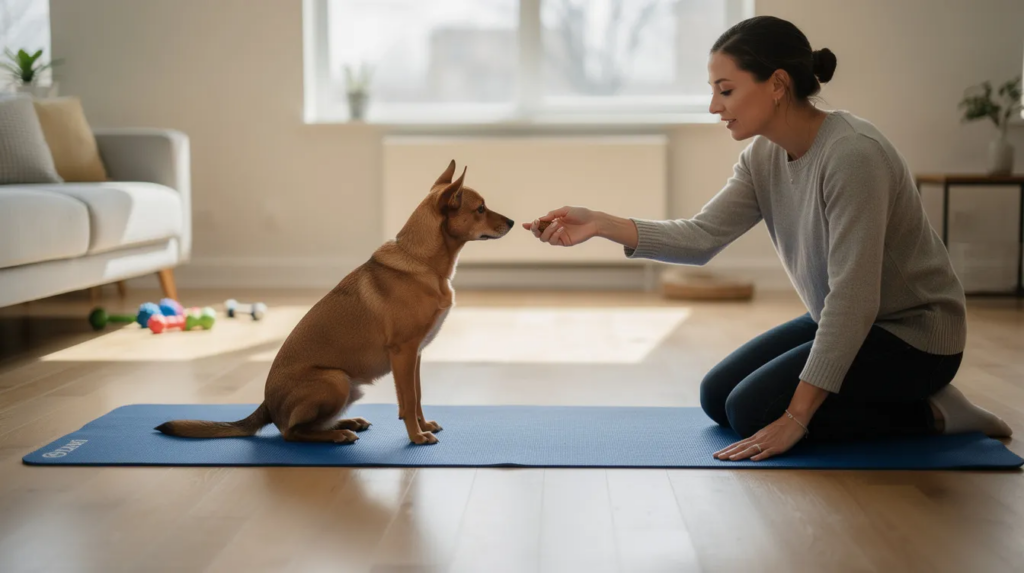
- Introduce the object: Lure your dog to step onto the bed with a treat. Use a marker word like “yes” and reward any paw contact on the surface. Repeat step several times from different angles.
- Add the word: Once your dog willingly steps onto the bed, calmly say “place” as they move on, then reward while they stay there.
- Add duration: Ask for a sit or down on the bed. Feed small treats every few seconds at first, then gradually increase the time between rewards.
- Add a release word: Use a clear release cue like “break” or “free” so your dog learns not to leave until they hear that specific word.
Keep training sessions short, about 3 to 5 minutes, a few times per day during the first week.
Proofing Place: Distance, Distractions, and Different Rooms
Once your dog understands place in a quiet room, you need to teach them the rules still apply in harder situations.
- Distance: Gradually send your dog to place from one step away, then across the room, then from another room over several days.
- Movement: Practice walking around the dog, leaving the room briefly, or sitting on the couch while your dog stays on place.
- Distractions: Add distractions one at a time. Drop a toy, open the fridge, or walk past with food while rewarding calm staying.
- New rooms: Move the bed or cot to different areas like the kitchen, hallway, or front door so your dog learns “place” means the object, not one location.
In busy 30A homes, also practice with realistic triggers like kids coming in from the beach, luggage rolling, or guests carrying coolers.
Common Mistakes Owners Make With the Place Command
Mistakes are normal. Here is what to watch for:
- Moving too fast: Increasing time, distance, and distractions all at once causes the dog to fail and leave the bed.
- Nagging: Repeating “place, place, place” instead of giving one clear cue and calmly guiding the dog back if they break.
- Using place as punishment: Only sending your dog to place when angry makes the bed feel negative instead of relaxing.
- No release word: Forgetting to teach a clear release means the dog guesses when to leave and develops sloppy boundaries.
- Inconsistency: Sometimes allowing the dog to leave on their own, sometimes enforcing the rule, confuses the dog’s behavior.
Many place command struggles come from moving too quickly, repeating commands, skipping the release word, or applying the rule inconsistently. Slowing down and making the expectations clear usually helps the dog understand the command more reliably.
Why Consistency Matters When Building Calm Behavior
Reliable calm behavior comes from repetition and clear expectations, not one long weekend of training.
- Dogs learn patterns. If “place during dinner” is enforced every night, it quickly becomes habit.
- Everyone in the household should use the same word, the same bed, and the same rules for leaving place.
- Short daily sessions (5 to 10 minutes, twice a day) tend to work better than occasional long sessions for longer periods.
During Off Leash K9 Training 30A board and train programs, dogs can work on obedience skills like place, sit, down, heel, and recall in a more structured training environment. This helps build reliability through repetition, consistency, and gradually increasing distractions.
How Place Fits Into a Bigger Obedience Training Plan
Place is not a standalone trick. It works alongside sit, down, heel, and recall as part of a complete dog training picture.
- Off leash reliability in public starts with solid control and calmness at home, including a strong place command.
- You can integrate place with other skills: recall to you, then send to place, then down on place, then wait until released.
- Place supports leash walking by teaching patience when putting on collars and leashes near the door.
- Behavior modification for reactivity often uses place as a calm default when triggers appear near the house.
Off Leash K9 Training 30A teaches obedience skills like place through private lessons and board and train programs for dog owners in Santa Rosa Beach, 30A, Destin, Miramar Beach, and nearby service areas.
When Professional Training Can Help Strengthen the Place Command
Not every dog or family will succeed with DIY steps alone. Consider professional help if:
- Your dog ignores treats, rushes guests, or constantly breaks place despite consistent practice.
- Your dog shows anxiety, reactivity, or aggression such as growling, lunging at windows, or panicking around visitors.
A professional trainer provides clear techniques, proper timing, and leash handling. Depending on the dog, the goals, and the program selected, training may include different tools and methods to build reliable obedience, safer control, and better communication between dog and owner.
If your dog has trouble settling, jumps on guests, rushes the door, or struggles with calm behavior at home, professional training can help create better structure, clearer expectations, and a more peaceful routine. Dog owners in Santa Rosa Beach, 30A, Destin, Miramar Beach, and nearby service areas can contact Off Leash K9 Training 30A to discuss training options.
FAQ
Below are common questions owners still have about the place command and calm behavior in the home.
How long can my dog reasonably stay on place each day?
Healthy adult dogs can work up to 30 to 60 minutes at a time with breaks, while a puppy should start with very short sessions of 2 to 5 minutes. Place time should be mixed with dog walks, play, exercise, and potty breaks so your dog is not confined all day. Think of place as one part of a balanced routine, not a substitute for activity.
Can multiple dogs in the same home have different places?
It is often helpful for each dog to have their own bed or cot so they do not crowd or argue over space. Teach each dog their own name plus the “place” cue and practice with one dog at a time before working them together. This prevents confusion and helps each dog understand that other dogs have their own designated place.
Is it okay to let my dog sleep overnight on their place?
If the place object is a comfortable bed and your dog is safe, overnight sleeping on place is fine. Your overnight routine should still include a clear release cue in the morning. Some owners prefer a crate at night and use place beds mainly for daytime structure around the house.
What if my dog gets off place as soon as I walk away?
Go back a step in training. Stay closer and reward more often before you gradually increase distance again. Calmly guide your dog back to the bed each time without scolding. This teaches that leaving early never works. Eventually, your dog learns that staying put is the only option that earns rewards.
Do I still need a crate if my dog has a strong place command?
Place and crate serve different roles. Place is for open, supervised calm in shared spaces.A crate provides safe confinement when unsupervised or traveling. Many families in busy households benefit from teaching both skills for maximum flexibility. Having both a crate and a place command gives you more options for different situations, from supervised family time to safe rest when your dog cannot be watched closely.
