
Introduction
Resource guarding is when a dog uses body language, avoidance, vocalizations, or aggressive behavior to maintain access to items, spaces, or people it considers valuable. It can overlap with possessive aggression, although not every form of resource guarding involves overt aggression. The behavior can range from subtle stiffening over a food bowl or moving away with an item to growling, lunging, snapping, or biting when someone approaches a valued resource.
This guide covers what you need to know about guarding in dogs: how to identify early warning signs, factors that can contribute to a dog guarding resources, training and management strategies that may help reduce the behavior, and when the situation calls for professional help. Whether you’re a dog owner in the 30A/Santa Rosa Beach area dealing with a pet that guards items from family members or other dogs, or you’re looking to establish healthy habits with a new puppy, this article provides practical steps to help you respond more safely.
Resource guarding is a natural behavior that can range from mild avoidance to serious aggression. Appropriate management, structured training, and professional guidance when needed can help reduce risk and improve how a dog responds around valued resources, especially when snapping, biting, or escalating aggression is involved.
By the end of this guide, you will be able to:
- Recognize common warning signs of resource guarding and situations that may increase risk
- Understand factors that can contribute to guarding behavior, including temperament, previous experiences, and environmental triggers
- Learn management and training approaches such as counter-conditioning and controlled exchanges
- Recognize when guarding behavior warrants help from a veterinarian or qualified behavior professional
- Apply prevention and management strategies that may reduce the likelihood or severity of guarding behavior
Understanding Resource Guarding
Resource guarding is any behavior a dog uses to discourage another being, whether a person, another dog, or another animal, from approaching, touching, or taking something the dog values. For a deeper look at the behavior, including common causes, warning signs, and management approaches, learn more about resource guarding in dogs. This protective behavior sits on a spectrum from mild tension to outright aggression, and it can occur around many types of valued resources. A dog’s temperament, previous experiences, learning history, environment, and the value of the resource can all influence guarding behavior. In busy households or environments with unfamiliar visitors, disrupted routines, or shared spaces, careful management around food, toys, resting areas, and other valued resources becomes especially important.
Types of Resource Guarding
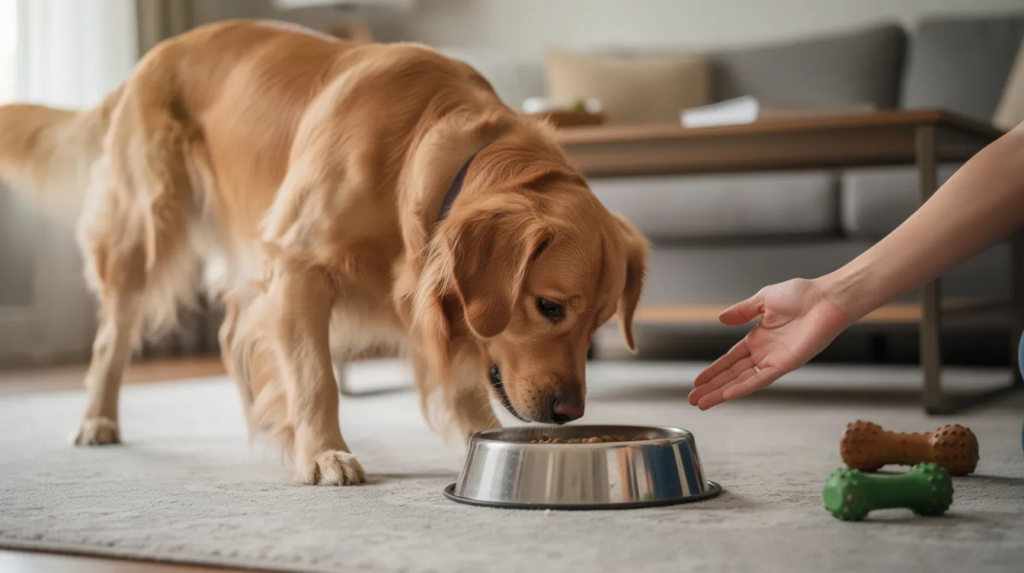
Food guarding is one of the most widely recognized forms. A dog may guard its food bowl, treats, bones, or stolen food-related items by freezing, eating rapidly, growling, or snapping when a person or another animal approaches. In one study of 1,016 dogs evaluated at a New York animal shelter, approximately 15% were identified as resource guarders. That figure reflects the population examined in that particular shelter and should not be treated as a prevalence rate for all dogs.
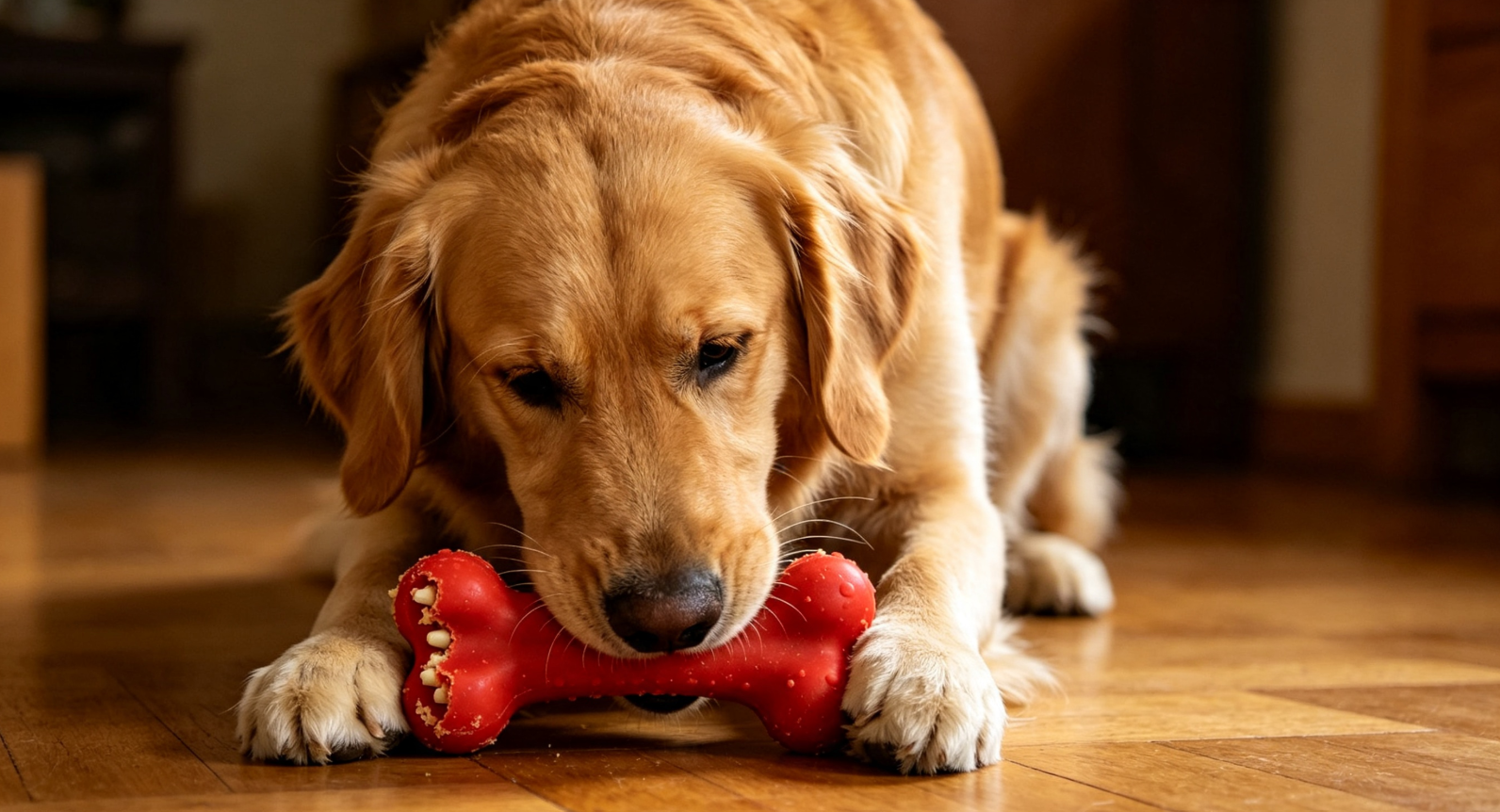
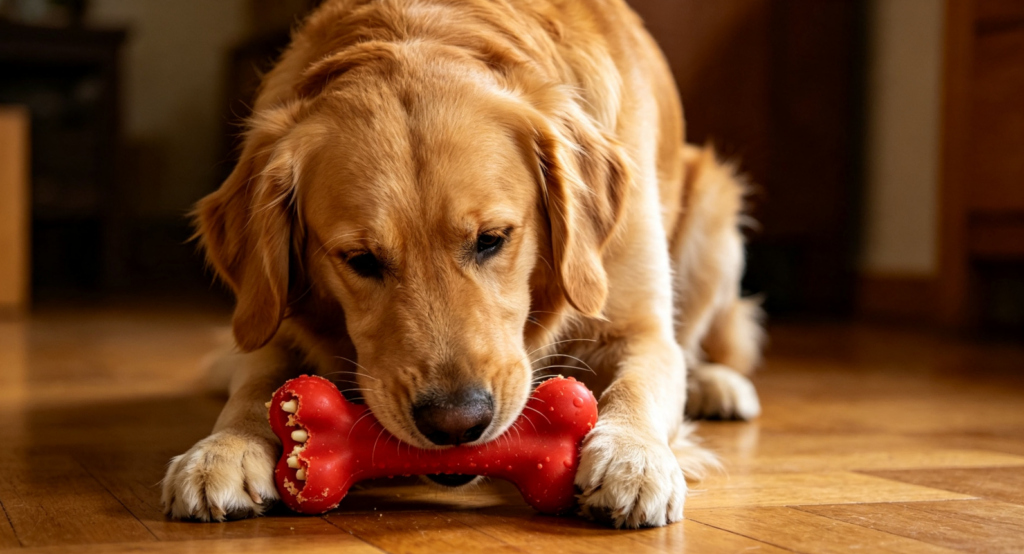
Object guarding involves toys, chews, personal items, or furniture. A dog may become more protective of an object when it considers that item especially valuable or unfamiliar. In multi-dog households, access to high-value toys and chews can also create situations in which one dog attempts to prevent another dog from approaching or taking the item.
Space guarding can involve locations such as a crate, a favorite spot on the couch, a bed, or a doorway. A dog may become tense, growl, move away, or display stronger defensive behavior when someone approaches its resting area or attempts to move it. In smaller or shared spaces, careful management can help prevent unnecessary interactions around locations a dog considers valuable.
People guarding can be particularly concerning because it directly involves interactions between the dog, family members, visitors, or other animals. A dog may attempt to prevent another person or animal from approaching someone it considers valuable. This type of guarding requires careful management, particularly when growling, lunging, snapping, or other aggressive behavior is present.
Each type connects back to the same basic goal: maintaining access to something the dog considers valuable. Whether a dog guards food, a treasured toy, a resting location, or access to a person, identifying the valued resource and the situations that trigger guarding is an important part of managing the behavior safely.
Root Causes and Risk Factors
Resource guarding can be influenced by several factors, including natural competition over valued resources, temperament, previous experiences, fear or anxiety, learning history, and environmental circumstances. Some dogs may be more prone to guarding than others, but no single cause explains every case. Understanding the individual dog’s triggers and history is therefore important when deciding how the behavior should be managed.
Early experiences may influence how a dog responds when people or other animals approach valued resources, but resource guarding can occur in dogs with many different backgrounds. One shelter study found resource guarding more frequently among adult and senior dogs than juveniles, although the study did not establish why that age difference occurred. A dog’s learning history, temperament, environment, and previous interactions around valued resources may all contribute to how guarding behavior develops.
How people respond to resource guarding can influence future interactions. Punishment, intimidation, or forcefully removing valued objects can increase conflict and may make a dog more concerned about losing a resource. Research has also found an association between removing a dog’s food dish during meals and more severe or frequent resource-guarding behavior, although that association does not prove that dish removal directly caused the behavior. Consistent household management can help reduce unnecessary conflict around valued items.
Environmental circumstances can also influence when resource guarding appears. In multi-dog households, access to food, toys, chews, and resting areas may create situations in which dogs compete for valued resources. Unfamiliar visitors, changing routines, and unpredictable activity can introduce additional triggers for some dogs. Recognizing warning signs early can help owners manage these situations before the behavior becomes more serious.
Recognizing Resource Guarding Warning Signs
Resource guarding can range from subtle body-language changes to more obvious aggressive behavior. Many dogs display signals such as stiffening, freezing, staring, rapid eating, moving away with an item, growling, or lip lifting, but owners should never assume that every dog will provide an obvious warning before snapping or biting. Learning to recognize changes in body language can help owners identify situations that need additional space or professional guidance.
Early Warning Signals
Physical signs of resource guarding can include stiff posture, freezing, and intense staring. A dog that freezes over its food bowl, locks its gaze on an approaching person, or shows “whale eye,” where the whites of the eyes become visible, may be communicating discomfort. Stiffening, growling, or positioning the body over an item can indicate that the dog wants additional space.
Some dogs may also begin eating more quickly when someone approaches or position their body to block access to a valued item. Low growling, lip lifting, or moving away with the resource can provide additional warning signals. These behaviors should be treated as information about the dog’s discomfort rather than an invitation to test how close someone can get.
Escalated Guarding Behaviors
As a dog’s discomfort increases, guarding behavior may progress to lunging, air snapping, or biting. In one New York shelter study, freezing was the most common response among dogs identified as resource guarders, while snapping or biting the assessment hand occurred in fewer than 14% of those dogs. These figures describe that specific shelter population and do not predict how an individual dog will respond.
Biting represents one of the more serious outcomes of resource guarding. Some dogs display lower-level warning signals before biting, but those signals may be subtle, brief, or absent in a particular interaction. Punishing growling or other warning behavior can interfere with valuable communication and may increase the risk of stronger aggressive responses. Owners should avoid testing how far a guarding dog can be pushed.
Environmental Context Factors
For dog owners in the 30A area, visitors, delivery workers, children, other pets, and changing routines can create situations in which a dog is approached while eating, chewing, or resting with a valued resource. In smaller or shared spaces, careful management of feeding and resting areas can help reduce unnecessary interactions around known triggers. Everyone in the household should understand when the dog needs space and which resources require additional management.
Identify the distance threshold. Determine how close you can get to the dog while it possesses a resource before any tension appears. Your starting point must be outside that threshold-far enough away that the dog remains relaxed.
Pair approach with high-value rewards. As you walk toward the dog (still outside the threshold), toss tasty treats-small pieces of hot dogs, cheese, or other high-value items- so the dog begins associating your approach with good things. Desensitize dogs by tossing food near them from a distance. If any signs of tension appear, increase your distance immediately.
To summarize: watch for stiff posture, fixed staring, rapid eating, growling, and blocking. If you see lunging, snapping, or any contact, the situation has escalated beyond what most owners should manage alone. The next section covers exactly how professional training addresses each stage.

Resource Guarding Management and Training Strategies
Effective management of resource guarding can include preventing unsafe situations, carefully managing access to valued resources, teaching reliable obedience and handling skills, and working on the dog’s response to specific triggers. Off Leash K9 Training 30A describes its overall approach as balanced dog training focused on clarity, communication, consistency, and positive reinforcement where appropriate. The training approach and equipment used can vary depending on the program and the individual dog’s needs.
Counter-Conditioning Protocol
Counter-conditioning is intended to change a dog’s emotional response to a trigger by creating positive associations with carefully managed approaches. For mild guarding behavior without a bite history, exercises may begin at a distance where the dog remains relaxed and comfortable. If a dog has snapped, attempted to bite, bitten someone, or makes the owner feel unsafe, these exercises should not be attempted without qualified professional guidance.
- Identify a comfortable working distance. Observe the dog’s body language from a distance where it remains relaxed around the valued resource rather than deliberately approaching until tension appears. If stiffening, staring, growling, rapid eating, or other warning signals occur, increase the distance and avoid testing the dog’s tolerance.
- Pair carefully managed approaches with high-value rewards. From an established safe distance, high-value treats can be tossed toward the dog without reaching toward the guarded item. The goal is to create a more positive association with a person’s presence while keeping the dog comfortable. If tension or aggressive behavior appears, stop the exercise and seek professional guidance rather than continuing to move closer.
- Teach a reliable drop or release cue. A well-established cue can give owners a useful way to ask a dog to relinquish an item without immediately reaching for it. Practice “drop it,” “leave it,” or the appropriate release command in low-pressure situations with lower-value objects before progressing carefully to more valuable items. A reliable release cue can support safer handling, but it should not be treated as a guarantee against resource guarding.
- Practice controlled exchanges using the trade-up method. Rather than forcibly taking items, offer something better. If a dog has a tennis ball, trade for a piece of chicken. Avoid taking items away forcefully to reduce guarding behavior. The dog learns in such a way that relinquishing a resource leads to an even better outcome.
- Increase distractions gradually only after the dog responds comfortably in easier situations. Practice in controlled environments before introducing more challenging settings, and involve adult family members as appropriate so management remains consistent. Children should not participate directly in resource-guarding behavior modification exercises and should instead be taught never to approach a dog that is eating, chewing, or guarding a valued item.
- Maintain consistency across adult family members and situations. Everyone in the household should follow the same management rules, use consistent cues, and avoid unexpectedly taking valued items from the dog. Environmental management and carefully applied training exercises can help improve a dog’s response around guarded resources, while consistency helps reduce confusion and unnecessary conflict.
Training Approach Comparison
| Approach | Primary Goal | Important Consideration |
| Desensitization and counter-conditioning | Change the dog’s response to someone approaching a valued resource | Progress gradually and avoid pushing the dog beyond its comfort threshold |
| Controlled exchanges | Teach the dog that releasing an item can lead to another positive outcome | Begin with lower-value items before attempting more challenging situations |
| Obedience and communication training | Improve responses to cues such as Drop, Leave It, Place, or Recall | Establish skills in lower-pressure situations before adding distractions |
| Environmental management | Reduce opportunities for unnecessary conflict | Separate dogs during meals and restrict access to known high-conflict items |
| Forceful removal or confrontation | Attempts to take control of a resource directly | Can increase conflict and should not be used to test a dog’s guarding behavior |
Dogs with a bite history, serious aggression, or guarding behavior that puts family members at risk should receive professional evaluation rather than having owners attempt increasingly difficult exercises on their own.
Common Challenges and Solutions
Even with the right training approach, resource guarding modification presents predictable obstacles. Here’s how to handle the most common ones.
Training Plateaus or Regression
Progress often stalls when owners push too quickly past the dog’s comfort zone or apply protocols inconsistently. If your dog was improving but has regressed, slow down. Return to a distance or resource value where the dog was successful, and rebuild from there. Increase training session frequency to shorter, more regular practice rather than longer, less frequent sessions. Review whether all household members are following the same rules-even small inconsistencies can undermine weeks of progress.
Multi-Dog Household Complications
When one dog guards resources from other dogs, management becomes the first priority. Implement separate feeding areas, manage access to high-value toys and chews, and provide individual resting spaces when appropriate. More serious aggression or repeated conflict should be evaluated professionally so that the appropriate training and management approach can be selected for the dogs involved.
Child Safety Concerns
Children are at heightened risk during resource-guarding incidents because they may have difficulty recognizing warning signals and are more likely to approach a dog during vulnerable moments such as eating or chewing. Supervise interactions closely, teach children never to approach a dog that is guarding a valued resource, and use physical barriers when necessary. If a dog has a history of snapping or biting, seek professional guidance about appropriate additional safety measures.
Consult a vet if resource guarding appears suddenly-an underlying medical issue such as pain or illness can cause a previously relaxed dog to become defensive over resources. A veterinarian can rule out physical causes before behavioral training begins.
Conclusion and Next Steps
Resource guarding is a natural behavior that can range from subtle avoidance to serious aggression. Early recognition, careful management, appropriate training, and professional guidance when needed can reduce risk and help improve a dog’s behavior around valued resources. Early training and thoughtful socialization can also help puppies develop positive associations around people, handling, and everyday resources, although no strategy can guarantee that resource guarding will never develop.
Here are your immediate next steps:
- Document your dog’s specific triggers. Note which resources your dog guards, at what distance guarding begins, and which family members or animals are involved.
- Implement safety management protocols today. Separate feeding areas, remove high-conflict items, and establish physical barriers where needed.
- Seek professional help if resource guarding leads to biting. Contact a behaviorist if your dog guards multiple items, or if aggressive behaviors haven’t improved despite your efforts. Ask for help if you’re worried your dog might bite someone-don’t wait for an incident. Professional help is needed if behavior doesn’t improve after training.
- Schedule a consultation. Off Leash K9 Training 30A offers free phone consultations to discuss your dog’s behavior, training goals, and available training options.
If you’re working through resource guarding issues alongside broader behavior concerns, related topics like building your dog’s confidence, rescue dog training, and using natural instincts in training can help you build a complete foundation for a safe, well-adjusted pet.
Frequently Asked Questions About Resource Guarding in Dogs
What is the importance of early intervention in resource guarding?
Early intervention is crucial because it helps prevent the escalation of guarding behaviors into aggression. Addressing resource guarding as soon as warning signs appear ensures safer interactions and more effective training outcomes.
Can resource guarding occur between dogs and cats in the same household?
Yes, resource guarding can occur between dogs and cats, especially around food, resting spots, or toys. Proper management and training are essential to minimize tension and promote peaceful coexistence.
How does exercise impact resource guarding behavior?
Regular exercise helps reduce anxiety and excess energy, which can decrease the likelihood of resource guarding. A well-exercised dog is often more relaxed and less prone to guarding behaviors.
Is resource guarding common in puppies, or does it develop later?
Resource guarding can appear in puppies as they learn to navigate their environment, but it often develops or intensifies with age, especially if early socialization and training are lacking.
How does barking relate to resource guarding?
Barking can be a vocal warning sign associated with resource guarding. Dogs may bark to alert others to stay away from their valued items before escalating to growling or snapping.