
If your dog explodes into barking and lunging the moment another dog appears on the horizon, you’re not alone. Reactivity is one of the most common behavior challenges pet owners face, and the good news is that it responds well to thoughtful, consistent training.
This guide walks you through exactly what reactivity is, why it happens, and how to help your dog feel calmer on walks starting today.
Key Takeaways
- A reactive dog overreacts to everyday stimuli with barking, lunging, or intense staring. This differs from aggression because most reactive dogs want distance, not a fight, and punishment typically makes reactivity worse.
- Most reactivity stems from fear, frustration, or poor socialization. Reward-based training improves outcomes, while aversive tools often escalate the problem.
- For your next walk: create distance immediately when a trigger appears, feed treats while your dog sees the trigger, then calmly exit before your dog loses control.
- A complete training plan involves identifying your dog’s triggers and thresholds, managing the environment, using counter conditioning and desensitization, and building focus skills like “look at me.”
- Progress takes weeks to months. Many dogs improve 50 to 90 percent with consistency, but professional help from a veterinary behaviorist is essential for severe cases.
What Is a Reactive Dog (and What It Isn’t)?
If you’ve ever crossed the street to avoid another dog while your pup loses their mind at the end of the leash, you already know the frustration. Here’s what you need to understand: your dog isn’t bad, broken, or trying to dominate anyone. Reactivity is an emotional response, not a character flaw.
A reactive dog is one whose response to common stimuli such as other dogs, strangers, bikes, or cars is disproportionately intense and hard to interrupt. We’re talking about:
- Explosive barking that continues long after the trigger passes
- Lunging, spinning, or jumping at the end of the leash
- Intense staring or fixation that ignores your voice
- Growling, whining, or frantic behavior
Reactivity isn’t the same as aggression. Many reactive dogs are perfectly friendly off-leash with familiar dogs or calm at home. The key difference is that a fearful dog trying to increase distance looks very different from one actively seeking conflict. A reactive dog often wants the scary thing to go away they’re not looking for a fight.
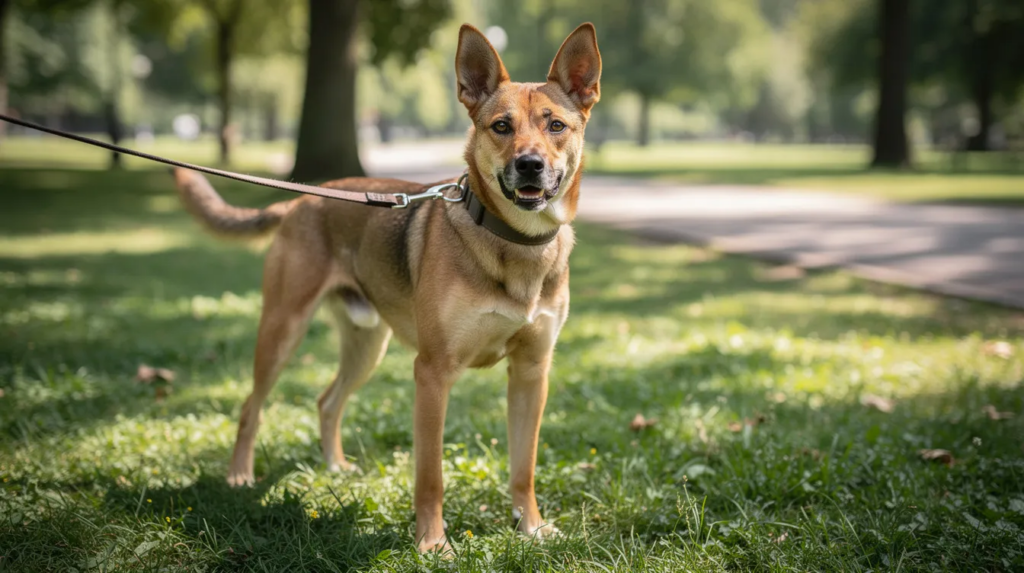
Common scenarios include leash reactivity on neighborhood walks, barking at passersby through windows, and over-the-top excitement at vet clinics or training classes. Reactivity can appear in puppies, but often intensifies during adolescence (roughly 6 to 18 months) and affects any breed from small companion dogs to large working breeds.
Here’s why it gets worse over time: when your dog reacts and the trigger walks away as usually happens, the dog learns that big displays work. This creates an ingrained habit that strengthens with every repetition.
Important for 2026: If your adult dog suddenly becomes extremely reactive or existing reactivity escalates quickly, schedule a vet visit. Pain, vision changes, or hearing loss can cause irritability that looks like behavior problems.
Why Dogs Become Reactive
Understanding the “why” behind your dog’s behavior shapes how you approach training. Reactive behavior almost always has an emotional root not stubbornness or spite.
Primary emotional drivers include:
| Driver | Example |
| Fear | A pup frightened by rough handling now reacts to reaching hands |
| Frustration | A social dog restrained by a leash when they want to greet |
| Over-arousal | A dog who simply can’t regulate excitement in busy environments |
| Contributing factors that lead to reactivity: |
Limited socialization before 12 to 16 weeks, when puppies are most receptive to new experiences- Bad experiences like being attacked during a walk or negative experiences at the vet
- Chronic stress from chaotic households or unpredictable routines
- Genetics some family lines produce more vigilant or sensitive dogs
Environmental pressures matter too. Busy urban sidewalks, narrow apartment hallways, crowded dog parks, and unpredictable off-leash dogs all create conditions where reactive dogs are pushed past their limits repeatedly.
A critical point: Physical punishment, leash jerks, and pain-based collars don’t fix fear they make it worse. When triggers consistently predict pain, the dog’s emotional response becomes more negative, and reactivity can escalate into genuine aggression.
Spotting Triggers and Thresholds
Effective reactive dog training starts with detective work. Before you can change your dog’s reaction, you need to identify what sets them off and how close they can be before losing control.
A trigger is anything that reliably sparks a reaction. Common examples include:
- Other dogs (especially certain sizes, colors, or movement patterns)
- Strangers (men with hats, people with backpacks)
- Moving objects (skateboards, bikes, delivery trucks)
- Sounds (sirens, construction noise)
Your dog’s threshold distance is where they notice a trigger but can still function taking treats, responding to their name, and moving away calmly. Once they cross that line, learning stops and survival mode kicks in.
Watch for early body language warnings before the explosion:
- Freezing or sudden stillness
- Weight shifting forward
- Closed mouth after relaxed panting
- Slow, stiff tail wag or tucked tail
- Ears pinned flat or pricked intensely forward
- “Whale eye” (whites of eyes visible)
Keep a simple trigger log for 7 to 14 days. Note the date, time, location, trigger type, distance, and your dog’s reaction. Patterns often emerge worse in the same area during evening hours, or more reactive on narrow streets than open parks.
Remember that thresholds fluctuate daily. A tired, stressed, or unwell dog starts reacting at greater distances. Adjust your expectations rather than pushing through on difficult days.
Immediate Management Tips You Can Use on Your Next Walk
Before formal training begins, management helps both you and your dog feel more in control. These tips work today.
Equipment that supports safety:
- A well-fitted front-clip harness (reduces pulling force)
- A standard 6-foot leash (not retractable)
- A treat pouch loaded with high-value food (chicken, cheese, hot dogs)
- Avoid prong or choke collars, which can worsen fear
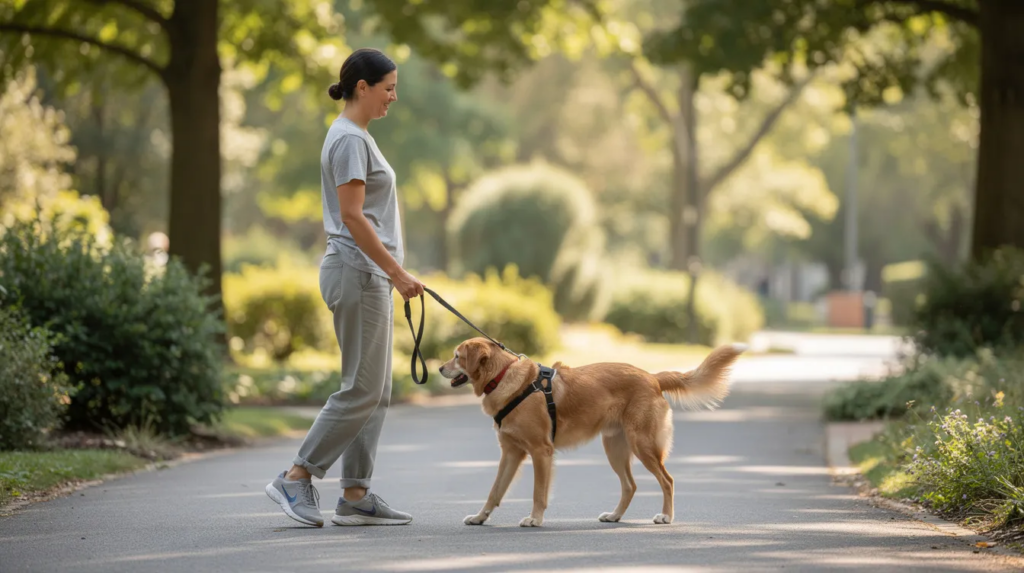
Master the U-turn:
Practice this escape move at home first:
- Say a cheerful cue like “this way!”
- Turn 180 degrees and walk briskly away
- Feed several treats near your leg as your dog follows
On walks, execute the U-turn the moment you spot a trigger approaching before your dog starts reacting.
Adjust your routes and timing:
- Walk during quieter hours (early morning, late evening)
- Choose wider streets and open spaces where distance is easier to maintain
- Avoid narrow sidewalks, dog park perimeters, and busy multi-use trails
Manage reactivity at home:
- Apply privacy film to street-facing windows
- Close blinds during peak trigger times
- Create buffer zones away from fence lines, and if local triggers feel overwhelming, behavior-focused dog training in Fort Walton Beach can help you build safer routines
This isn’t “giving in.” Avoiding triggers while training prevents your dog from practicing unwanted behaviors. Every explosion makes the next one more likely.
Advocate for your dog in public. A calm “My dog is in training, please give us space” works wonders. Step off the path well before your dog reaches threshold. You don’t owe strangers access to your pet.
Core Training: Counter-Conditioning and Desensitization
This is the science-based foundation of behavior modification for reactive dogs. The goal is changing how your dog feels about triggers, not just suppressing what they do.
Counter conditioning pairs the trigger with something your dog loves. When your dog sees another dog and immediately gets chicken, the emotional math changes. Over time, “dog appears” starts predicting “good things happen” instead of danger.
Desensitization means exposing your dog to triggers at intensities that don’t cause meltdowns, then gradually increasing difficulty.
A step-by-step protocol using another dog as the trigger:
- Find your starting distance where your dog notices but stays calm (can take treats, respond to name)
- The moment your dog sees the trigger, start feeding treats rapidly
- Continue feeding while the trigger is visible
- Stop treats when the trigger disappears
- If your dog tenses, refuses food, or reacts, increase distance immediately
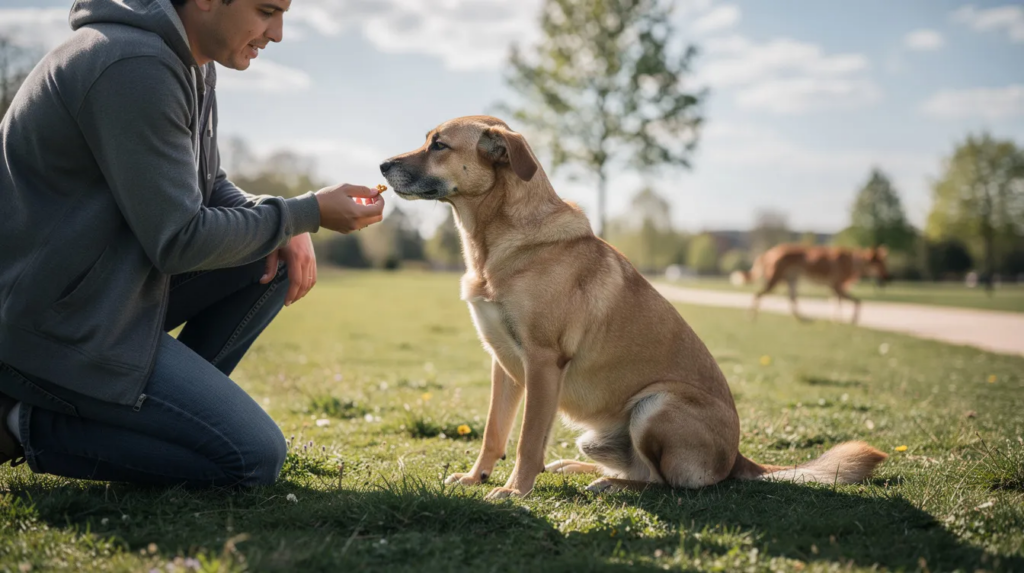
Session structure matters:
- Keep sessions to 5 to 10 minutes
- Practice 3 to 5 times per week
- End before your dog is exhausted or overwhelmed
Track progress through concrete changes:
- Faster recovery after seeing triggers
- Ability to work at closer distances without reaction
- More frequent eye contact with you instead of fixation on triggers
- Decreased intensity when reactions do occur
Never push your dog over threshold during training. If barking or lunging starts, you’ve moved too fast. Reset with easier setups next session.
Building Focus and Alternative Behaviors
Counter conditioning changes feelings. Now teach your dog what to do instead of reacting.
The “look at me” cue:
- Hold a treat near your face
- When your dog makes eye contact, mark it (“yes!”) and treat
- Add the cue word once the behavior is reliable
- Gradually extend duration and add distractions
- Practice in progressively challenging environments
Loose-leash “heel” or “close” position:
- Start indoors with high reinforcement for staying by your side
- Build duration before adding movement
- Generalize to low-distraction outdoor spaces before using near triggers
The “Look at That” game:
This teaches controlled observation:
- When your dog glances at a distant trigger, mark the head turn
- Feed when they look back at you
- Over time, the trigger becomes a cue to check in with you
Build impulse control through daily practice: programs like 3-week immersive board-and-train for real-world obedience can jump-start these skills if you’re struggling to practice consistently.
- Sit before leash goes on
- Wait at doorways
- Pause before crossing streets
All focus work must be solid without triggers present before you use it around them. Trying to use fragile skills in high-stress situations sets both you and your dog up for failure.
Choosing Safe Socialization and Exposure
For reactive dogs, socialization doesn’t mean forcing interaction. The goal is calm coexistence and observation at a safe distance, which can be supported through comprehensive obedience and behavior correction programs.
What to avoid:
- Dog parks with unpredictable dogs and no space control
- Crowded group events or festivals
- Situations where your dog has no escape option
What works better:
- Controlled setups with a trusted friend and a calm, neutral dog
- Starting at large distances and gradually decreasing as both dogs remain relaxed
- Parallel walks where dogs walk in the same direction without direct interaction
For non-dog triggers, try:
- Watching people from a car parked at the edge of a quiet lot
- Observing joggers and children from a park bench at a distance
- Gradual exposure to city sounds while pairing with treats
Small, well-run training classes that use positive reinforcement can work if they have clear space rules and prevent uncontrolled greetings, and structured professional dog obedience programs and packages can offer additional guidance.
Always respect your dog’s signals. If they’re turning away, lip-licking, or trying to retreat, don’t insist on interaction. Forcing greetings backfires.
When to Call in a Professional
Reactive dog training is emotionally draining. Expert support from certified trainers or veterinary behaviorists, such as professional dog training services in the 30A area, can speed progress and increase safety.
Red flags that require professional intervention:
- Bites or near-bites have occurred
- Intense fixation that’s nearly impossible to interrupt
- Reactivity toward household members (human or animal)
- You can’t walk safely in your neighborhood
- You feel genuinely unsafe or out of control
Know the difference between providers:
- General dog trainer: Focuses on obedience and manners; best for teaching basic skills.
- Certified behavior consultant (CBCC, IAABC): Has formal behavior science education; specializes in fear and reactivity cases.
- Veterinary behaviorist (DACVB): Holds a veterinary degree plus behavior residency; handles complex cases and medication needs, and you can also contact experienced dog trainers in the 30A region for additional support.
- For bites or severe aggression, a veterinary behaviorist is essential. They can diagnose medical contributors, prescribe medication, and design comprehensive treatment plans.
- Choose providers who prioritize positive reinforcement and avoid punishment-based methods, and review detailed FAQs about professional training methods and guarantees so you know what to expect.
- For dogs with severe anxiety or a long history of reactivity, combining behavior modification with medication often produces better outcomes than training alone.
- Even with professional help, meaningful change typically takes months, not weeks.
- Management may always be part of your dog’s life, and that’s okay.
Long-Term Management and Supporting Your Dog’s Well-Being
After the first few months of active training, most guardians enter a maintenance phase. Here’s what sustainable life with a reactive dog looks like.
Accept your dog’s individual limits. Not every dog will enjoy cafés, dog parks, or crowded festivals. Framing these as reasonable limitations rather than failures reduces frustration for everyone.
Key lifestyle factors that reduce overall reactivity:
- Predictable daily routines supported by a variety of structured dog training services and courses
- Appropriate physical exercise (not excessive high-intensity activity)
- Mental enrichment: scent games, puzzle toys, scatter feeding
- 12 to 16 hours of quality rest per day
Plan for periodic “tune-ups.” Moving house, adding a baby, or major schedule changes can temporarily increase sensitivity. Brief returns to structured training help re-establish coping skills.
Build a support network with other reactive dog owners. Online communities offer safe walk routes, training tips, and emotional validation when you’re struggling, and expert dog training advice on methods and positive reinforcement can deepen your understanding between sessions.
The trajectory for most dogs is encouraging. With time, patience, and thoughtful training, many dogs move from chaotic, unpredictable walks to mostly calm outings. Reactions may still occur occasionally, but they’re shorter, less intense, and easier to recover from.
Start with one tip from this guide today even just the U-turn. Small, consistent steps add up to big changes over months. Your good dog is doing their best, and so are you.
FAQ
Can a reactive dog ever be “cured,” or will my dog always be reactive?
Many dogs achieve dramatic improvement, often 50 to 90 percent fewer or less intense outbursts, with consistent training. However, there’s no guaranteed cure because temperament, genetics, and past experiences leave lasting impressions. Most guardians learn to manage situations so skillfully that reactivity becomes rare or very mild. Viewing this as a long-term management project rather than a quick fix typically leads to better outcomes and less frustration.
How long does it usually take to see progress with a reactive dog?
Small improvements often appear within 2 to 4 weeks: faster recovery after barking, noticing triggers at slightly closer distances, or more frequent check-ins with you. More substantial changes such as calmly passing dogs on the other side of the street typically take 3 to 6 months or longer depending on severity. Setbacks are normal. Illness, stress, or an unexpected negative encounter can temporarily worsen behavior. Focus on the overall trend over months, not individual walks.
Is it okay to use tools like prong collars or e-collars on a reactive dog?
While these tools may suppress visible behavior short-term, they work through discomfort or pain and often increase fear around triggers. This can convert mild reactivity into serious aggression. Current behavior science and veterinary behavior experts recommend positive reinforcement methods and humane equipment. If your dog’s size or strength overwhelms you, consult a force-free professional for safer handling strategies rather than defaulting to aversive tools.
Should I let people or other dogs greet my reactive dog to “get them used to it”?
Forcing greetings typically backfires and increases fear or frustration. Focus first on calm observation at a distance, where your dog learns that triggers appear and disappear without pressure. Once your dog copes well at distance, any greetings should be carefully planned, brief, and completely optional. Your dog must always be free to move away.
What if my reactive dog only barks at home, like out the window or at the fence?
Window and fence reactivity follow the same patterns as on-leash reactivity and strengthen with repetition barking makes triggers “leave.” Reduce visual access using window film, closing blinds, or creating buffer zones. Simultaneously, teach cues like “come away” or “on your mat,” rewarding your dog for leaving the window and settling elsewhere. Over time, decrease reliance on physical barriers as trained behaviors become stronger.