What Causes Dog Reactivity on Walks? Real Reasons, Real Solutions
Key Takeaways
Reactivity on walks is extremely common, especially in adolescent dogs between 8 and 24 months old. Most reactive behavior is driven by fear, frustration, or anxiety rather than a desire to cause harm. In fact, estimates suggest that 80 to 90 percent of reactivity cases are fear-motivated.
The most common leash reactivity causes include genetics, lack of early socialization, past scary experiences, overstimulation, leash tension, and confusing signals from the handler.
Reactivity and aggression are not the same thing. A reactive dog that barks and lunges on walks is typically trying to create distance from a trigger or cope with overwhelming emotions, not launch an attack. The goal is usually relief, not injury.
Here along 30A and Santa Rosa Beach, you might notice your dog barking at other dogs on the bike path, lunging at passing golf carts, freezing at the sight of bikes, or fixating on joggers and kids running toward the water. These are classic signs of reactivity in action.
The good news is that with structured training, improved leash skills, and professional support from Off Leash K9 Training 30A, most reactive dogs can make significant progress toward calmer, more enjoyable walks.
What Is Dog Reactivity on Walks?
Dog reactivity on walks means your dog has an intense, exaggerated emotional response to everyday things like people, other dogs, bikes, cars, wildlife, or sudden environmental changes. Instead of calmly observing and moving on, the reactive dog reacts with behaviors that feel way bigger than the situation calls for.
Common reactive behaviors include:
- Explosive barking
- Lunging to the end of the leash
- Spinning or jumping
- Hard staring and freezing
- High-pitched whining
- Pulling hard toward or away from the trigger
Here is how the cycle often works: Your dog spots a trigger, like another dog across the street. The dog freezes, stares, then explodes into barking and pulling. The other dog passes. Your dog feels relief. That relief reinforces the barking and lunging because it “worked.”
For example, picture walking along Scenic Highway 30A when your dog sees another dog across the road. Body stiff, ears forward, your dog starts barking and straining at the leash. The moment that the other dog disappears around a corner, your dog calms down. Without intervention, this pattern repeats and strengthens.
While reactivity can appear behind fences, from porches, or through condo windows, this article focuses specifically on what happens during walks.
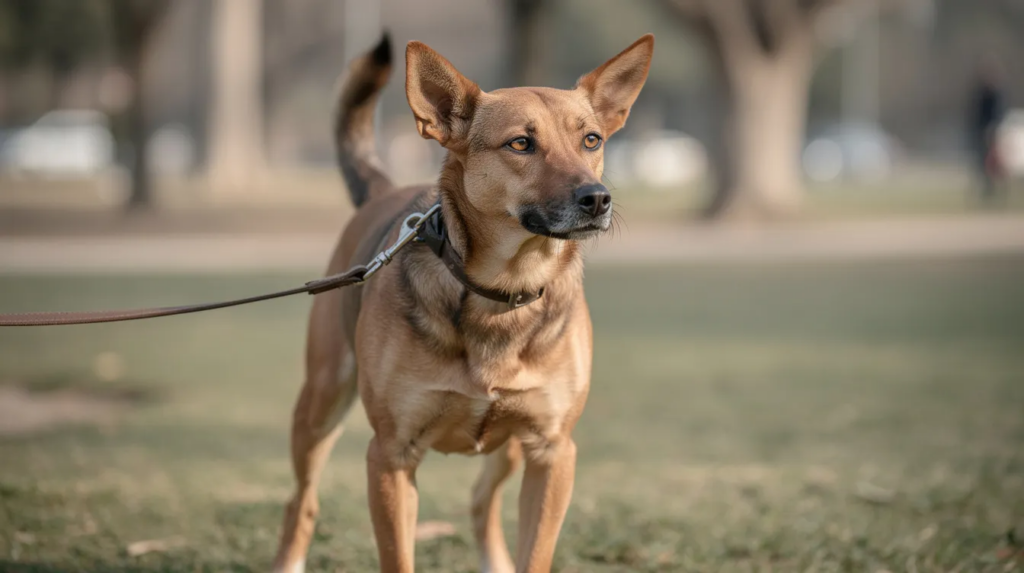
Reactivity vs Aggression: What Is the Difference?
Many dog owners assume a dog that barks and lunges on walks must be aggressive. In most cases, this is not accurate. The reactive dog is usually trying to cope with fear, frustration, or over-arousal rather than attempting to injure anyone.
Aggression involves intent to cause harm. Think repeated snapping with contact, lunging to bite, or sustained attempts to injure. Reactivity is a big display designed to change the situation. The dog wants to increase the distance from something scary or get closer to something exciting, but the primary goal is not to hurt.
Consider this comparison: A dog reactive on walks might bark and hit the end of the leash at every unfamiliar dog along the Timpoochee Trail. That same dog might happily play off-leash with familiar dog friends in a fenced backyard. An aggressive dog would show concerning behavior in both scenarios.
Even though reactivity is not the same as aggression, it still requires attention. Reactive behavior can escalate to a bite if the dog feels cornered with no escape options. Early training and management prevent that risk from growing.
Common Causes of Dog Reactivity on Walks
There is rarely a single cause behind reactivity. Most leash-reactive dogs have a combination of genetic tendencies, learning history, and current handling patterns working together.
Fear is the most common driver. Many dogs react to an increased distance from things that frighten them. Triggers might include strange dogs, tall men with hats, skateboards, beach bikes, or children running with pool noodles. The dog spots something worrying and decides that barking and lunging is the fastest way to make it go away.
Frustration appears frequently in young, energetic breeds. These dogs desperately want to greet or chase but cannot because the leash prevents it. The frustration builds until it spills out as squealing, barking, and lunging. A dog that plays beautifully off leash may become a handful on leash.
Overstimulation hits hard during busy tourist seasons along 30A. Golf carts, scooters, rental bikes, crowds, and wildlife can overwhelm even friendly dogs. When the environment exceeds what a dog’s brain can process, reactions happen.
Lack of socialization during the critical puppy period of roughly 4 to 14 weeks often surfaces as reactivity between 6 months and 2 years. Puppies that missed diverse positive experiences may struggle to cope with novelty as adolescents and older dogs.
Anxiety creates constantly vigilant dogs that scan for threats. These dogs might react to small changes like a new trash can on the curb or a flapping beach umbrella. Their nervous system runs on high alert.
Pain or discomfort from ear infections, joint issues, or skin allergies can make any dog touchier. A dog that feels uncomfortable may have a shorter fuse and react more readily.
Learned patterns develop when barking and lunging repeatedly “work.” If the trigger always leaves after the outburst, the dog learns that big reactions are effective coping strategies.
Handler influence matters more than most owners realize. Tight leashes, sudden corrections, nervous talking, or inconsistent rules can add tension and confusion that fuel reactivity.
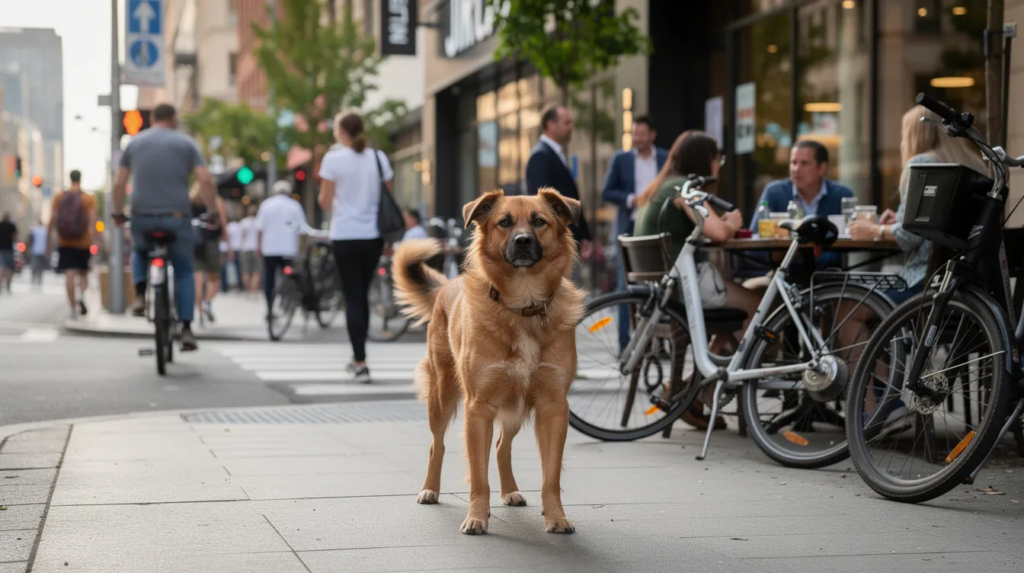
Why Dogs Bark and Lunge on Walks: Leash Reactivity Causes
Leash reactivity is a specific form of reactivity that appears or worsens when the dog is on leash. The same dog might cope much better off leash in open, controlled spaces.
Leashes change everything about how a dog moves and communicates. In natural greetings, dogs curve around each other, sniff, and maintain options to move away. Narrow sidewalks in Santa Rosa Beach force head-on approaches with no escape routes. This feels confrontational even to non-reactive dogs.
Tension on the leash sends signals. When you tighten your grip as soon as you spot another dog, your dog feels that change and interprets it as a warning that something is wrong. Vigilance increases. Reactivity follows.
Equipment choice affects comfort. Collars can create pain when dogs pull, while front-clip harnesses distribute pressure more naturally.
Predictive patterns develop over time. If your dog has been yelled at or jerked on the collar whenever other dogs appear, the sight of another dog becomes a predictor of conflict. The dog starts reacting before anything actually happens.
Here is a concrete example: Your dog walks nicely on a quiet side street. A jogger appears in the distance. You tense, shorten the leash, and hold your breath. Your dog feels the leash go tight and starts barking before the jogger gets close. The leash tension became the cue.
How to Recognize a Dog Reactive on Walks
Early signs often appear before full barking and lunging. Learning to read your dog’s body language allows you to intervene sooner.
Body language shifts are your first warning. Watch for stiffening, freezing in place, ears rotating forward, mouth closing tightly, slow tail wagging at mid-height, weight shifting forward, and dilated pupils. These subtle changes happen in the seconds before the explosion.
Behavior patterns during full reactivity include explosive barking, lunging to the end of the leash, spinning, jumping, high-pitched whining, and attempts to chase bikes or golf carts.
After-effects reveal how stressed your dog became. Post-incident signs include difficulty calming down after the trigger leaves, heavy panting, refusing treats, scanning the environment constantly, and pulling more for the rest of the walk.
Picture this: Your dog walks past quiet driveways calmly. At the end of a beach access, another dog comes into view. Your dog’s body freezes, tail goes up, and within seconds the barking begins. That freeze was your opportunity to create distance before things escalated.
Consider keeping a simple trigger diary noting dates, locations, and what your dog reacted to. Patterns emerge quickly. You might discover your dog reacts worse in late afternoon, at certain distances, or around specific types of dogs or people.
How Handler Behavior and Environment Make Reactivity Worse
Dogs constantly read our body language and routines. Some well-meaning responses unintentionally fuel the problem.
Leash tension is a major contributor. Keeping the leash tight whenever another dog appears increases your dog’s agitation and removes their ability to move naturally. The dog feels trapped.
Poor timing of rewards or corrections confuses the dog. If corrections come as triggers appear, your dog may learn “other dogs make my owner upset” rather than understanding what behavior you actually want.
Repeated overwhelming exposure without support sensitizes dogs instead of helping them adjust. Walking through crowded Seaside or Rosemary Beach every evening with a reactive dog rehearses the same big outbursts over and over.
Your emotional state matters. Anxious posture, quick breathing, and nervous chatter become part of the prediction. Your dog learns that when you act worried, something scary is coming.
Here is the reassuring part: once owners learn clearer handling skills and choose better routes, dogs often improve faster because the environment becomes more predictable and supportive.
Practical First Steps to Manage a Reactive Dog on Walks
Start with management before expecting perfect behavior. These steps help reduce reactivity while you work on training.
Choose quieter times and routes. Early morning side streets, less crowded beach access points, and residential neighborhoods reduce trigger encounters along 30A.
Use distance strategically. Cross the street, step into a driveway, or make a smooth U-turn before your dog’s threshold is crossed. This is smart management, not avoidance.
Upgrade your equipment. A well-fitted front-clip harness and 6 to 10 foot leash allow more natural movement while maintaining control.
Play engagement games. When a trigger is far away, toss a few high-value treats into the grass and let your dog search. This helps redirect attention and supports decompression.
Reward good choices. Bring real meat or cheese and reward any check-ins, loose leash walking, or calm glances at potential triggers. Progress happens in small moments.
Avoid punishment. Harsh leash pops, yelling, and forced greetings backfire with reactive dogs. These strategies increase fear and often make the dog’s response worse over time.
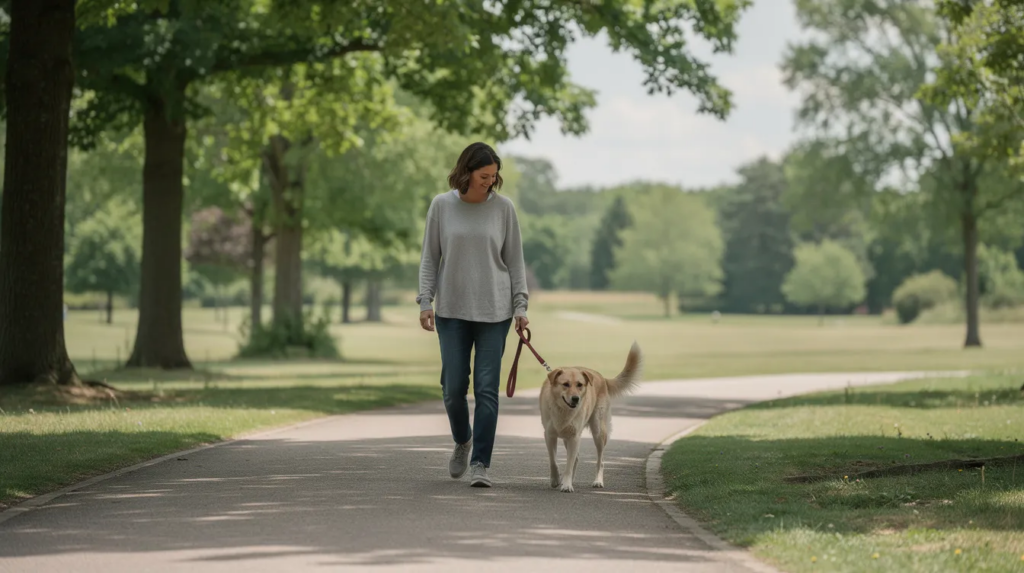
How Reactive Dog Training Works
Effective reactive dog training focuses on changing the dog’s emotional response to triggers and teaching clear alternative behaviors. The goal is not simply to suppress barking.
Counter conditioning rewires emotional associations. Your dog sees a trigger at a safe distance, something great happens, like food or praise, and over time, the dog expects good things instead of worry. This process takes repetition and patience.
Thresholds determine where learning happens. Dogs need to work at a distance where they can still think, eat, and respond to cues. If your dog is already barking and lunging, the dog’s brain cannot absorb new information.
Training sessions should be short, frequent, and carefully planned. Start in low-distraction areas like quiet cul-de-sacs before progressing to busier scenic paths. Consistency across all family members and pet sitters prevents mixed signals.
Positive reinforcement builds a positive association with triggers over time. Every calm behavior around a trigger strengthens the new pattern.
Advanced goals like reliable off-leash obedience become realistic only after the dog can stay composed around distractions on a long line or leash. Behavior modification requires building a foundation first.
How Off Leash K9 Training 30A Can Help
Off Leash K9 Training 30A provides hands-on support for families along the Florida Panhandle struggling with leash reactivity and wanting safer, calmer walks.
Our services directly address reactivity through behavior modification for leash reactivity and aggression concerns, private lessons focused on loose leash walking and focus, and immersive 2 to 3 week board-and-train programs that build distraction-proof obedience.
We train dogs for real life. That means practicing in public settings around 30A once the dog is ready, not just in quiet training rooms.
We coach owners alongside their dogs. You will learn proper timing, leash handling, how to read early stress signals, and how to choose better walking routes and routines.
Consider a dog that used to bark and lunge at every passing cyclist along 30A bike paths. With structured training, that dog learns to walk calmly past bikes and joggers at a safe distance. The owner learns how to maintain that progress.
Ready to talk through your dog’s specific triggers and history? Schedule a free phone consultation to discuss which training program fits your situation best.
FAQ: Dog Reactivity on Walks
Can a reactive dog ever become “normal” on walks?
Many reactive dogs learn to walk calmly with proper training and management. The degree of improvement depends on genetics, how long the behavior has been practiced, and how consistently training is applied.
Some dogs will always need extra space and careful handling around certain triggers. That is okay. Progress looks like fewer outbursts per week, quicker recovery after seeing a trigger, and better ability to eat treats and respond to cues outside.
Measure success in smaller wins rather than expecting perfection overnight.
Is my dog reactive because I did something wrong?
Reactivity usually has multiple causes, including genetics and early life experiences that were beyond your control. Normal adolescent development also plays a role.
Past choices might have contributed, like too much exposure too soon or accidentally reinforcing barking. But focusing on blame helps nobody. What matters now is changing routines, building handling skills, and getting appropriate training.
Seeking help from a certified trainer is a sign of responsibility and care, not failure.
Should I stop walking my reactive dog completely?
Most dogs still need movement and mental stimulation. However, traditional neighborhood walks during busy times may not serve your dog well while reactivity is severe.
Temporary alternatives include short decompression walks in quiet areas, yard play, scent games at home, and car rides to low-traffic locations. The long-term goal is returning to more normal walks after training helps your dog feel safer around triggers.
Can reactivity turn into aggression over time?
Repeated stressful encounters without support can increase the risk of a bite, especially if the dog feels cornered or trapped with no escape options. Chronic stress changes behavior patterns over time.
Early intervention with training, better management, and sometimes veterinary input greatly reduces that risk. Take any snapping, air-biting, or attempts to make contact seriously. Seek professional help for behavior promptly.
When should I involve a veterinarian or behavior specialist?
Consult a veterinarian if reactivity appears suddenly in an adult dog, worsens quickly without obvious reason, or accompanies other changes like limping, weight loss, or sensitivity to touch. Pain, thyroid imbalances, or other medical issues can lower tolerance and increase irritability.
Dogs with a long history of intense reactivity or bite incidents often benefit from a collaborative plan involving both a trainer and a veterinary behaviorist working together on the dog’s health and behavior.